The Architecture of Words
A Master Class in Speech, Memory, Culture, and Resilience
By Ghirmay Debessai Habtezion
My lifelong dialogue with the English language began at age seven, on the very first day I stepped into a primary school classroom. My primary mentor was my father, a man of profound intellectual discipline and advanced academic standing. He did not merely teach me vocabulary; he handed me a structural blueprint. He revealed to me the secret of the eight parts of speech as the foundational architecture of grammar.
Understanding how nouns, pronouns, verbs, adjectives, adverbs, prepositions, conjunctions, and interjections interlock was like receiving a universal decoder ring. While my classmates wrestled with basic sentence construction, I possessed a map of human thought. That early mastery gave me an enduring academic edge through primary school, high school, and university, consistently placing me among the top students.
More importantly, that grammatical skeleton became my anchor when I went on to learn eight foreign languages. Whether decoding complex syntax or translating texts, English served as my primary reference point. Supported by decades of insatiable reading—from global news broadcasts and daily international newspapers to literary classics—I moved fluidly between tongues, producing extensive translations into English and eventually serving as an Arabic translator for the President of Eritrea.
Learning a language in an academic vacuum is insufficient. To truly master human expression, one must engage with its highest literary works, its popular media, and its rhythmic soul. Early on, I adopted an unconventional, highly effective methodology by treating the Bible and the Quran as master textbooks.
Regardless of spiritual context, both sacred texts offer unparalleled linguistic richness, poetic cadence, and elevated prose. Studying them deepened my grasp of classical style and metaphor. Simultaneously, I immersed myself in song lyrics, absorbing the emotional tone, idiomatic phrasing, and cultural nuances that traditional grammar books rarely teach.
To refine my spoken delivery and accent, I turned to vocal mimicry while always adding a generous dose of humor to the process. I would study prominent political leaders, celebrated actors, and broadcast journalists across major media outlets, watching video clips on platforms like YouTube and reading public discussions on Facebook, meticulously imitating their cadences, pauses, and rhetorical flourishes. Humor became my ultimate bridge in language learning, proving that when you imitate a world leader’s grand eloquence or an actor’s dramatic cadence, you break down the fear of making mistakes.
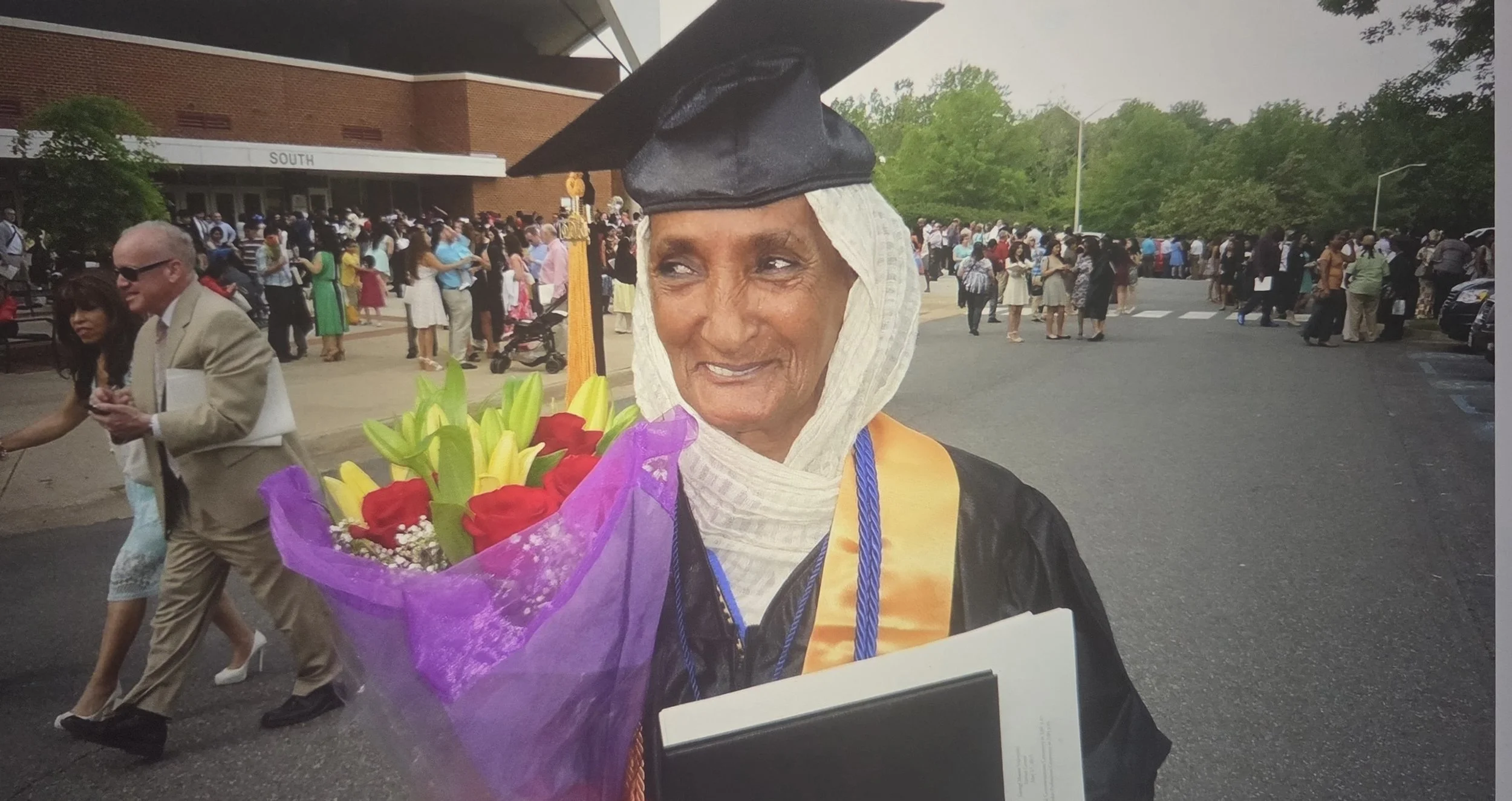
Despite my background as a senior journalist at Eri-TV for 18 years, and a seasoned presidential translator, my arrival in the United States presented a humbling reality check. Even with a degree in Economics and a degree in Political Science and International Politics from George Mason University in Fairfax, Virginia, I encountered formidable hurdles in everyday American life.
Phonetics in a classroom differ wildly from lived, casual speech. I found myself mispronouncing words I had read a thousand times in books, navigating a distinct accent, and adjusting to the rapid pace of conversational American English. Furthermore, true fluency requires more than political or academic vocabulary. I realized that despite my command of world history and geopolitical affairs, I lacked everyday cultural literacy in informal areas. Navigating local culinary culture and cooking terminology, American sports commentary and athletic jargon, personal finance, market news and business concepts, everyday technology, computer science, and digital media terms, alongside conversational idioms, local humor, and casual weather talk, proved eye-opening.
In certain settings, I felt completely overwhelmed, which forced me to ask a profound question regarding whether one ever truly masters a language. English is a living, voracious sponge that borrows vocabulary, often redundantly, from almost every language on earth. Furthermore, native speakers across different regions speak with vast tonal variations, regional slang, and unique expressions. In every corner of the world, including native English-speaking environments, individuals frequently struggle to express themselves clearly.
Recognizing this was not an excuse, but an epiphany: language is dynamic, chaotic, and perpetually evolving, proving that being multilingual is an ongoing journey rather than a static destination.
This lifelong relationship with words has always been deeply intertwined with my devotion to broadcast communication, creative writing, and family life. Spending nearly two decades as a media executive and senior journalist allowed me to serve on the frontlines of public communication and international diplomacy. Beyond the newsroom and the translation desk, my passion has continuously expressed itself through literary creation, poetry, and cultural analysis.
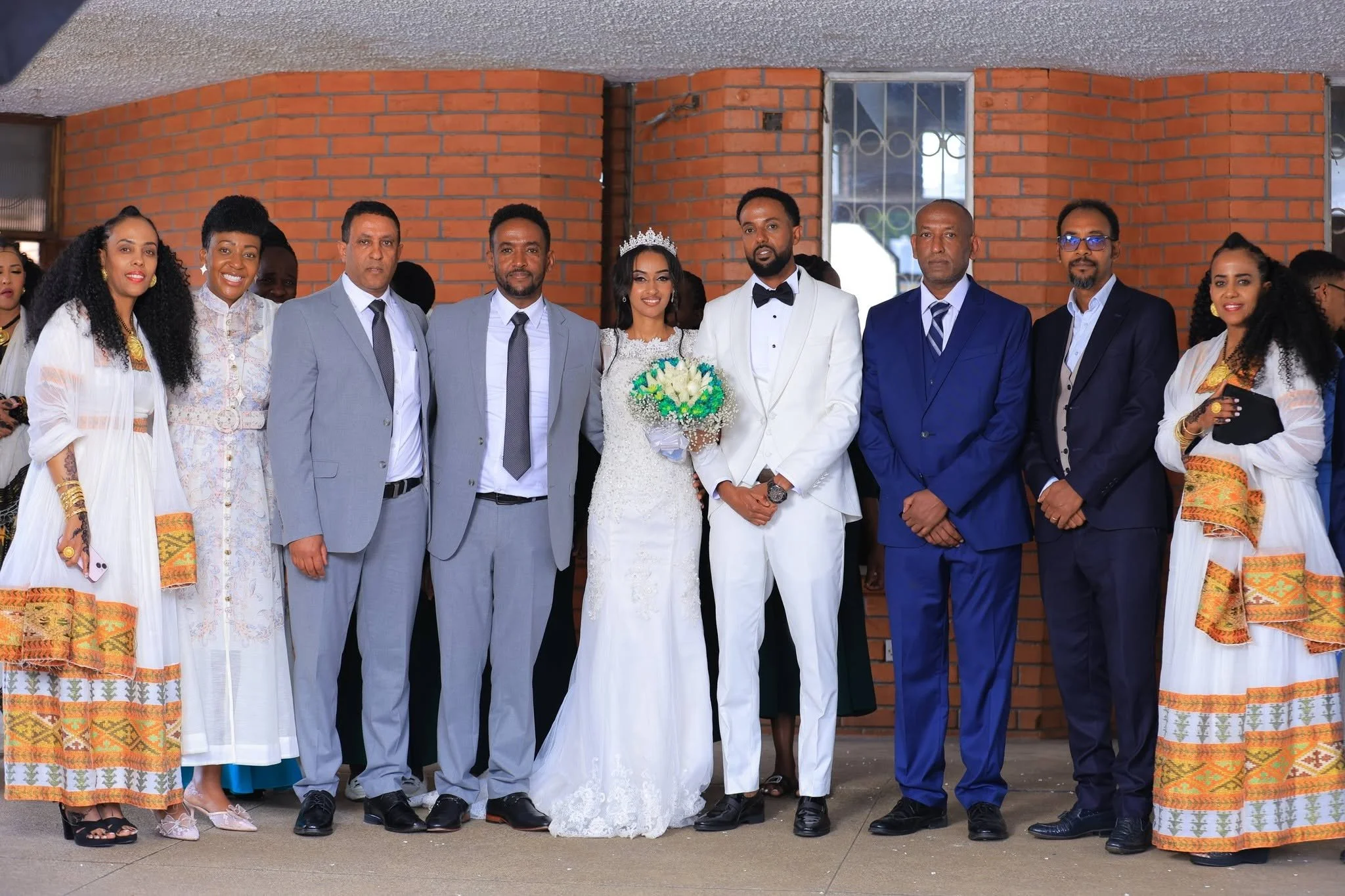
Yet above all my professional endeavors, my greatest pride remains my family. I have poured my life into raising three children now aged 25, 23, and 21. Seeing my 23-year-old child recently marry was a joyful milestone, confirming that my primary mission of preparing my children to navigate life with independence and integrity has been fulfilled.
That same sense of foundational purpose naturally defines my work in human services. Having served for four years as a Vocational Integration Consultant at the Refugee Women’s Alliance in Seattle, Washington, I have spent years guiding newcomers through the exact terrain I once walked. Though my formal tenure at the organization reached its conclusion, my commitment to social work and community empowerment remains unwavering.
When an individual struggles with an accent, feels overwhelmed by American workplace communication, or despairs over adapting to a new country, social work is not merely a job title; it is a lifelong calling. I continue to offer a lived roadmap, drawing on the story of the seven-year-old boy learning the eight parts of speech from his father, the journalist studying sacred texts and song lyrics to decode human expression, and the scholar who had the humility to keep learning upon reaching American shores.
Ultimately, every language learner must master the structural framework of grammar rules, recognizing that the foundational parts of speech serve as a universal compass. We must diversify our textbooks beyond standard coursebooks by utilizing global news, poetry, sacred texts, and song lyrics to build deep cultural resonance. We must embrace mimicry and humor without fearing accents or mispronunciations, experiment with vocal cadence, and practice cultural humility by remaining curious students of sports, finance, culinary arts, and daily community life. Perfection is an illusion, because communication is fundamentally about connection, empathy, and shared human experience.
The Roots of My Journey
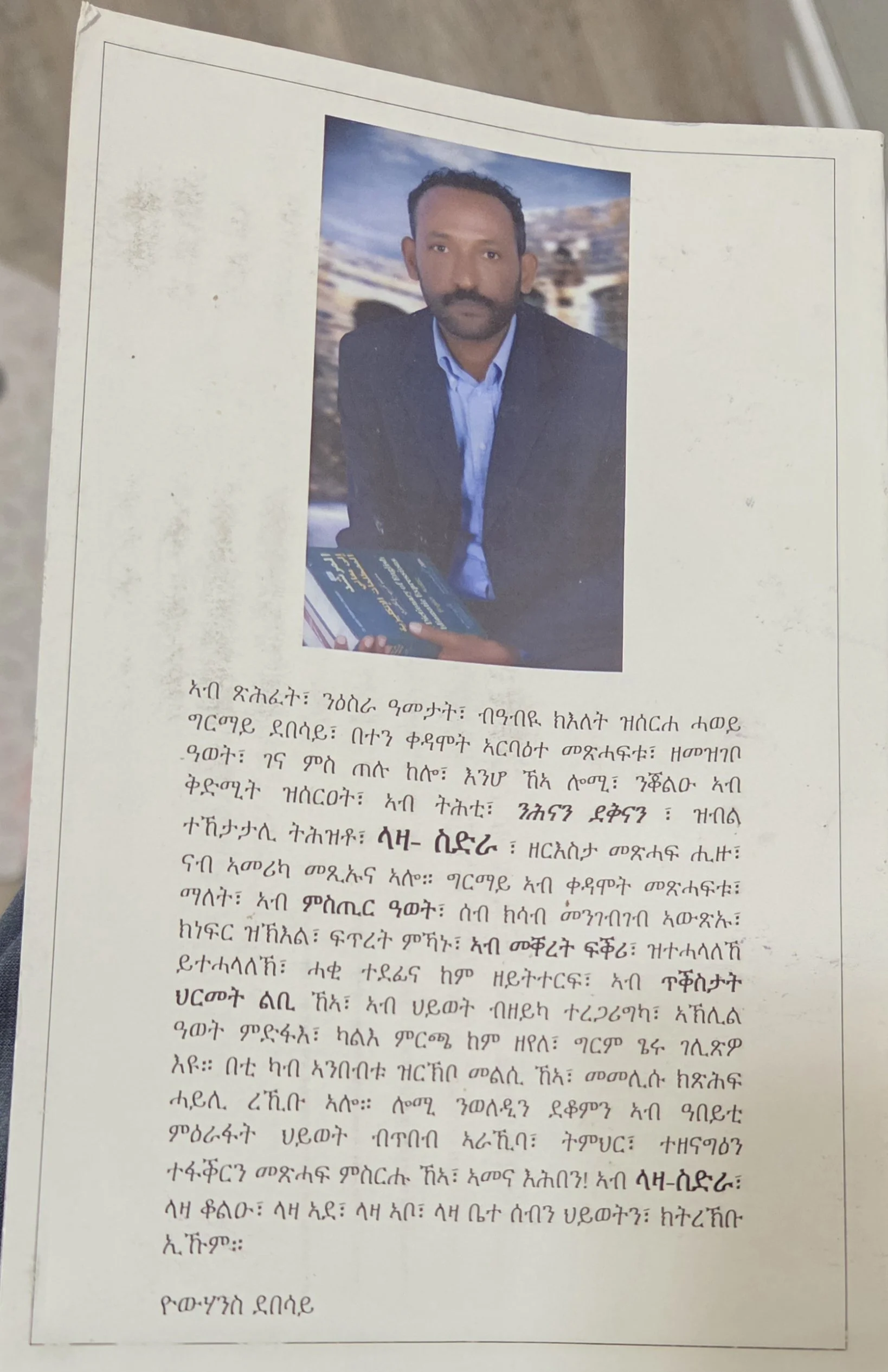
"Documented history and shared stories are the very soul of future generations. My passion for writing, observational analysis, and truth was nurtured at home through the rich oral traditions of my mother."
Excerpts from Laza-S’dra (The Flavor of the Family)
By Ghirmay D. Habtezion (2012)
Among all the stories, gentle humor, folktales, and spiritual wisdom my mother shared with us, I found an inexhaustible reservoir of life lessons that has stayed with me forever. One particular story has never faded from my memory—a tale carrying a profound message about the Crow and the Fox.
I may have forgotten how the story began precisely, but the Fox was deeply offended by something the Crow had done. As folklore always tells us, the Fox was remarkably cunning and clever—a trait my mother constantly emphasized. Seething with anger over the Crow's actions, the Fox pondered how to exact her revenge. Knowing that the Crow had an undeniable weakness for meat, she decided to use his own desire against him. She secured a fresh fetal membrane—the fleshy, tissue-like placenta left behind from a newborn donkey—and draped herself in it, lying perfectly still in an open field to mimic a discarded piece of raw meat.
Seeing what appeared to be an easy meal, the Crow swooped down in excitement, cawing eagerly: "Caw, caw, caw!"
Hearing this story as children from my mother’s lips brought us an indescribable, boundless joy.
Thinking the ground was safe, the Crow landed—only for the Fox to spring her trap, pouncing on him with a sharp cry: "Got you, you foolish Crow!"
Trapped without escape, the Crow began to plead. As my mother told it, he was ready to accept whatever punishment was coming his way.
We would lean in, breathless with excitement: "And then what happened, Mom? What happened next?"
She would smile and continue:
"Well, my children, wanting his punishment to be absolute, the Fox decided that his fate must be a bitter death! Gleefully, she sneered at him: 'Choose how you die, liar! Should I throw you into the fire and burn you to ashes? Should I take a knife and slit your throat? Or should I hurl you off this steep cliff so you shatter on the rocks below? Which do you prefer? Choose your death!'"
"So what did he choose?" we would ask eagerly.
"The Crow played his hand brilliantly," my mother explained. "He pleaded: 'Sister Fox, burn me in the fire if you wish, or slaughter me with your knife. Just please, whatever you do, do not throw me off that steep cliff! I beg you, Sister Fox, anything but the cliff!'"
Hearing this, the Fox smirked: "Aha! So it is the cliff you fear most?" And without a second thought, she hurled him straight over the edge into the abyss.
She leaned over the cliff, eagerly anticipating his gruesome demise. Instead, the Crow spread his wings, cawing triumphantly as he soared gracefully into the open sky: "Caw, caw, caw!"
Outsmarted and left behind, the Fox sighed in deep regret: "Ah, you tricked me after all, you cunning Crow!"
"But Mom," we would ask, "isn't the Fox supposed to be the clever one? How did he manage to fool her?"
My mother would look at us warmly and impart the real lesson:
"Boasting about how clever you are means nothing if you do not think critically. Overconfidence is the ultimate trap."
Reflecting on the Lesson.
From this simple bedtime story, I learned profound lessons about human nature, strategy, and critical thinking—observations I have seen play out in real life time and again. It is this foundation of storytelling, heritage, and wisdom that continues to shape my work as an author, journalist, and social servant today.

The Only Radical Law
Every headline, every policy, and every human decision must face one decisive question: Is this done in love?
Humanity has spent millennia building empires and writing codes, yet every enduring philosophy and every sacred text converges on the same truth: love is not a passive sentiment—it is the ultimate operating framework of reality. To know the divine, you do not look into the sky; you look directly into the eyes of your fellow human beings. Love is the bridge that turns the unseen into lived truth.
There are only two ways to walk this earth. The path of malice destroys everything it touches, leaving a wake of noise and brokenness. The path of love builds. It is the soil from which genuine peace, dignity, and joy endure. In social work,translation, and community building, the evidence is undeniable: when people are met with radical compassion rather than cold bureaucracy, their world shifts. Love is an active, life-giving force.
We were never meant to survive in isolation. True love demands community—standing shoulder-to-shoulder, breaking linguistic divides, bearing burdens, and sharing unapologetic laughter. Joy is our greatest resistance against despair. When a community is anchored in radical care, no institutional barrier or life hardship can break it.
Speak of love. Live in love. Hold fast to it in every room you enter. Do not hurt one another, and do not allow the noise of the world to drown out this revolutionary mandate.