The Triumph of Grace and Iron
An Ode to Nechi Fisahazion: Warrior, Artist, Mother, and the Immortal Spirit of Eritrea
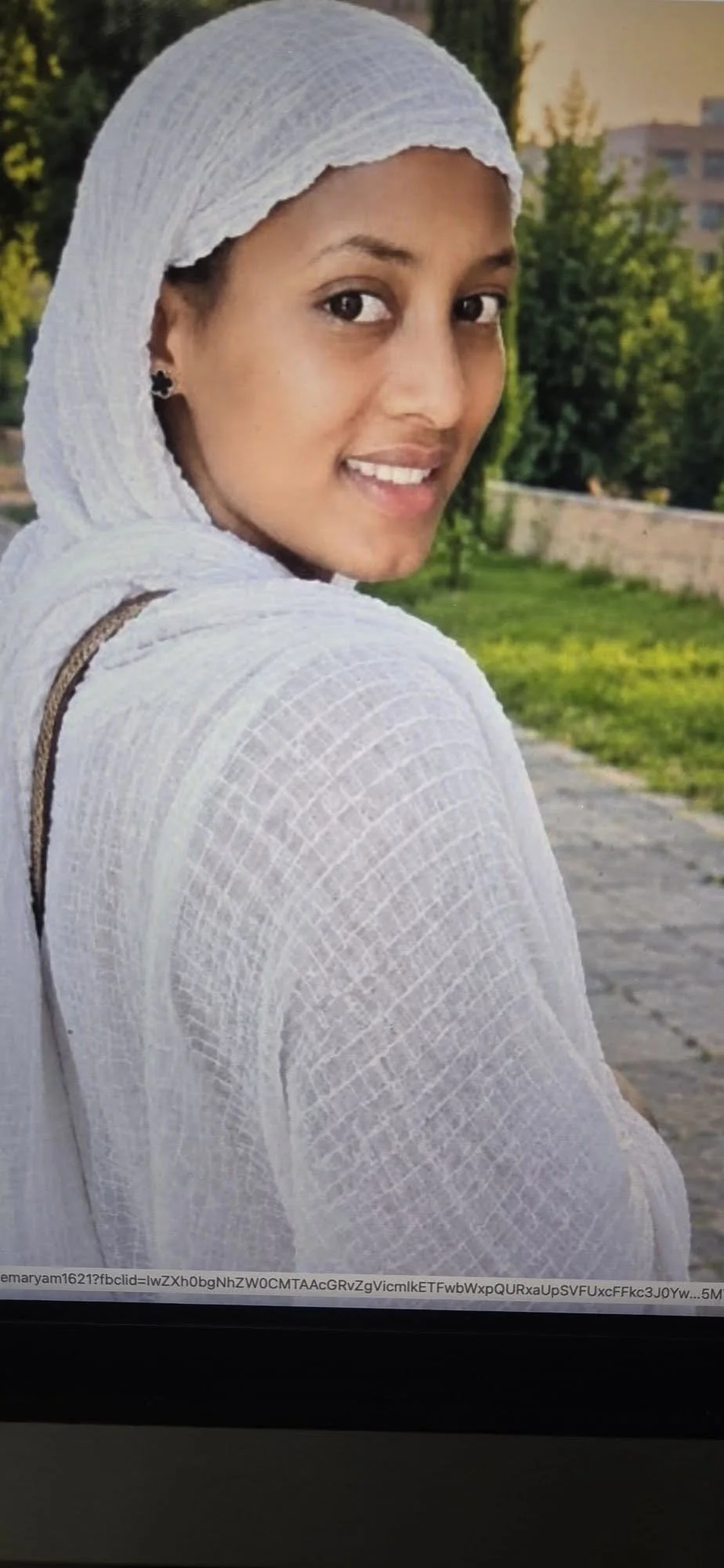
Look closely at this frame. Captured here is not merely a face, but the absolute architecture of youth. It is the portrait of Nechi Fisahazion.
In her radiant, open smile, one reads a pure and unfiltered sincerity; a transcendent beauty reflects off her eyes. For a quiet moment, the sheer grit and unyielding fortitude that forged her soul remain veiled behind this luminescence. Why?Because a warm, luminous benevolence stands at the forefront, casting an undeniable glow. Yet behind this graceful composure lies a legendary journey.
As the sweetness of early youth gave way to the unrelenting crucibles of life, an infinite reservoir of inner power awoke within the young Nechi. Overcoming illness, displacement, and the severe tides of war, she has carried her life upward into a sacred realm defined by a single, victorious word: Temesgen—eternal gratitude.
This face—adorned with love and serene beauty—was once tested by the harsh realities of a childhood spent in the wilderness, amid the bitterness and grandeur of Eritrea’s march toward sovereign independence. Across every epoch of her life, she endured it all: struggle, heartbreak, joy, poverty, and abundance. Yet out of those fiery trials, an everlasting monument was born: her art. Extraordinary, captivating, breathtaking art.
Nechi, who today stands at the absolute zenith of Eritrean cinematic and theatrical performance, shares a profound intimacy with life—but an even deeper intimacy with artistic truth. She is not merely a former pastoral shepherdess, a frontline freedom fighter, or a devoted mother. She is a marvel of human resilience—a woman who refused to be left behind in the relentless race of existence, stepping forward to master education, intellect, and stagecraft alike.
The character forged through such a life enabled her to embody the definitive archetype of the Eritrean mother in the landmark film 'Eta Ade' (The Mother). She did not merely act; she became the true mother on screen. Clothed in dignity,fierce devotion, and heroism, she presented the world with a majestic, awe-inspiring portrait of Eritrean motherhood.
Her brilliance did not suddenly emerge overnight; its roots trace back to her early youth. Yet as her artistic and personal trajectory advanced, when waves of illness and the sorrow of exile threatened to engulf her, Nechi refused to surrender.She conquered every adversity. Through her God-given spirit and the steadfast love of the brothers and sisters standing beside her, she emerged as an enduring beacon of triumph.
Nechi stood shoulder-to-shoulder with her fellow freedom fighters in the trenches to secure our liberation, later translating our national narrative, history, and sacred memory into high art. Yet her contribution did not stop on the screen or the battlefield. She raised four exceptional, refined, and outstanding children, embraced her grandchild, and offered her pure,unblemished devotion to Eritrean society.
This victory was never a solitary achievement. She shared this triumphant life with her beloved husband, Luul Kahsay,honoring him with the same deep affection she received. To behold this extraordinary journey is to understand the true meaning of a divine blessing.
Nechi Fisahazion is the embodiment of discipline and unshakable fortitude. Every single footprint of her journey leaves a profound mark on the lives of those around her. She works, creates, contemplates, speaks, laughs, and shares joy with boundless warmth. Nechi knows only love; hatred has no sanctuary in her heart.
She has traversed life’s most bitter tribulations not with bitterness, but with continuous work, overflowing kindness, and a heart full of thanksgiving. So much of what is noble, aspirational, and sacred in human existence is captured within her.
It is precisely why a life of such living weight, grace, and historical grandeur must be written, honored, and immortalized in time.
© 2026 Ghirmay Debessai Habtezion. All rights reserved. Published via ghirmayunbound.com.
The Architecture of Sound: A Portrait in Limitless Devotion
From the unassuming sanctuary of a dedicated creative space, a profound musical awakening is taking shape. Rahel Kiros draws sound from the krar—the ancient, storied stringed instrument of East Africa—yet to call her merely a traditional instrumentalist is to miss the boundless horizon of her art. Rahel's artistry brooks no borders; her musical consciousness is vast, luminous, and infinitely expressive. While her roots run deep into ancestral soil, she embraces with an open heart the rich sonic tapestry of Eritrean music, effortlessly invoking the spirits of legends like Helen Meles and Abraham Afewerki.
Hers is a fierce, radiant love for life itself, and that irrepressible vitality pulses through every resonant chord.
To watch Rahel play is to bear witness to uncompromised dedication in its purest form. She approaches her craft with an exquisite alchemy of effortless grace and unyielding resolve—taking each measured step with discipline, yet driven by a fierce, unshakeable devotion to mastering the masterworks of the titans who came before her.
Yet her music transcends mere technical brilliance. The message vibrating from her strings carries a profound, philosophical gravity—a creed rooted wholly in existence, affection, shared humanity, and the relentless pursuit of joy. Through the wooden frame and strings of the krar, she acts as a bridge between souls. She is not bound by convention; she is expansive. She does not merely play music—she is, in every sense, an instrument of connection.
In the presence of such luminous talent, ordinary words inevitably falter. Rahel Kiros remains, quite simply, one of those rare and magnificent souls who leaves you standing in absolute, reverent awe.
Ghirmay Debessai,