
Beyond the Mirage: The Real Eritrea
For decades, Western discourse surrounding the Horn of Africa has stagnated within a reductive paradigm—viewing complex regional realities through a shallow lens of external interventionism, humanitarian sentimentality, or ideological caricature. To truly comprehend the existential reality of Eritrea, American observers and foreign policy strategists must look past these superficial narratives and engage directly with the unvarnished imperatives of realpolitik, historical memory, and sovereign agency.
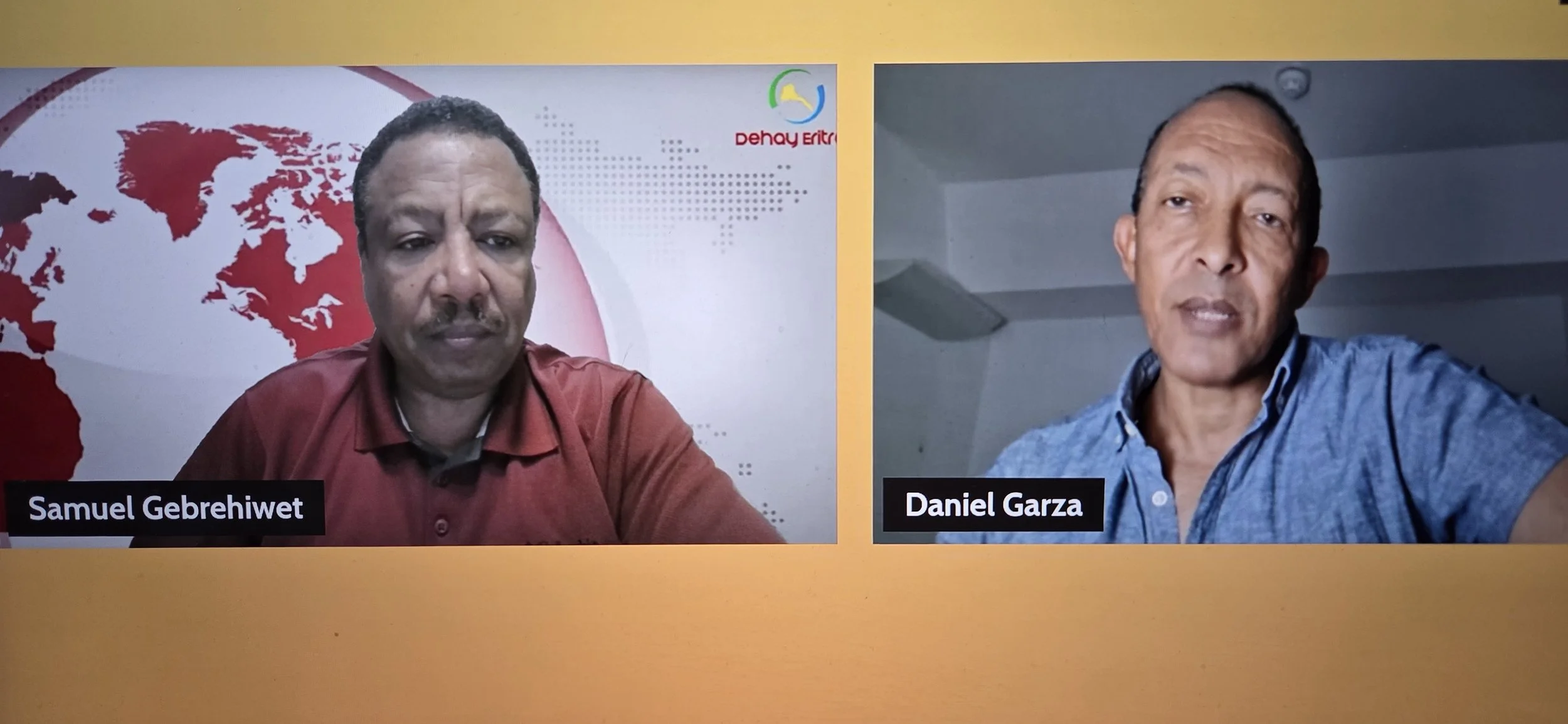
In a recent, definitive discourse on Dehay Eritrea with host Samuel Gebrehiwet (Aka Aka), political science scholar, veteran freedom fighter, and exile Daniel Garza delivered a masterclass in strategic doctrine. His analysis provides an indispensable framework for understanding not merely Eritrea’s current geopolitical dilemmas, but the resilient spirit of a nation forged in the crucible of absolute self-reliance.
It remains an immutable law of international relations that statecraft is dictated solely by cold, calculated national interests—never by moral appeal or sentimental pity. Imploring the international community, invoking legacy grievances, or lamenting on the world stage yields precisely zero strategic leverage. Garza’s thesis is not a counsel of fatalism, but an imperative of grand strategy: precisely because no external power will ever champion Eritrea’s cause out of altruism, Eritreans must aggressively reclaim, master, and elevate their own diplomatic apparatus. Through sophisticated, unyielding statecraft, the nation must forge an invulnerable sovereign posture—a state so formidable, self-sufficient, and intellectually luminous that no adversary dares compromise its integrity. In a volatile geopolitical furnace where the faintest, most imperceptible spark can instantly ignite an uncontainable conflagration, every strategic posture must be executed with extraordinary foresight, exquisite vigilance, and absolute intellectual supremacy.
Eritrea’s sovereignty was not a benevolent gift bestowed by international consensus; it was purchased with an ocean of blood and monumental sacrifice. That sacred legacy resides inalienably within the populace, never with a ruling cabal. Today, however, decades of administrative stagnation and political theater have placed the country in a state of artificial suspended animation—a nation locked in an "institutional refrigerator," frozen, isolated, and destined to shatter into dust if left untended. Thawing this dangerous freeze is an existential imperative. Psychological coercion and trivializing rhetoric designed to persuade citizens that they lack the capacity to safeguard their own destiny must be decisively rejected. Just as every sophisticated weapon system or military drone introduces an inherent countermeasure, every political crisis harbors a viable, human-engineered resolution. So long as the ideal of Eritrea remains fiercely enshrined within the conscience of its people, no amount of political machination can ever extinguish it.
The hour for rigorous, unsparing reckoning has arrived. True patriotism is validated not through performative devotion or empty rhetoric, but through tangible labor and the deliberate architecture of enduring institutions. Professing a supreme love for the homeland requires more than passion; it demands measurable endeavor, transparency, and systematic accountability. To engineer an exalted future, a national culture must enshrine institutional genius over sycophancy, supplanting failed stewardship with brilliant stewards capable of navigating complex modern realities. A nation ultimately endures within the spirit of its people; converting that inner fire into an enduring, civilized, and sublime sovereign state is the supreme calling of this generation.
Written by Ghirmay Debessai (Ghirmayunbound)
Date: October 20, 2026
Silent Complicity
The trajectory of modern Eritrean history is defined by a singular, haunting paradox: the magnificent endurance of a people set against the deafening, calculated silence of the global order. For decades, as the fate of Eritrea hung in the balance, international statecraft chose not justice, but deliberate indifference. Why has the world repeatedly chosen passivity in the face of Eritrean suffering? It remains one of the most profound and unsettling enigmas of regional realpolitik.
When Eritrea was forcibly shackled to Ethiopia under a flawed and compromised federal structure, the international community looked away. When that autonomy was systematically eroded and illegally dismantled by imperial autocracy,those same powers chose quiet complicity over the rule of law. Left with no alternative, Eritreans retreated into the rugged mountains, transforming raw hardship into an unyielding war for national self-determination.
Throughout thirty agonizing years of armed struggle, the human cost was immense. Civilians and fighters alike endured carpet bombings, napalm, cluster munitions, arbitrary detentions, and wholesale destruction. As Eritrean blood drenched its ancestral soil, the arbiters of global justice closed their eyes and sealed their ears, treating a nation's existential plight as mere collateral in cold-war diplomacy.
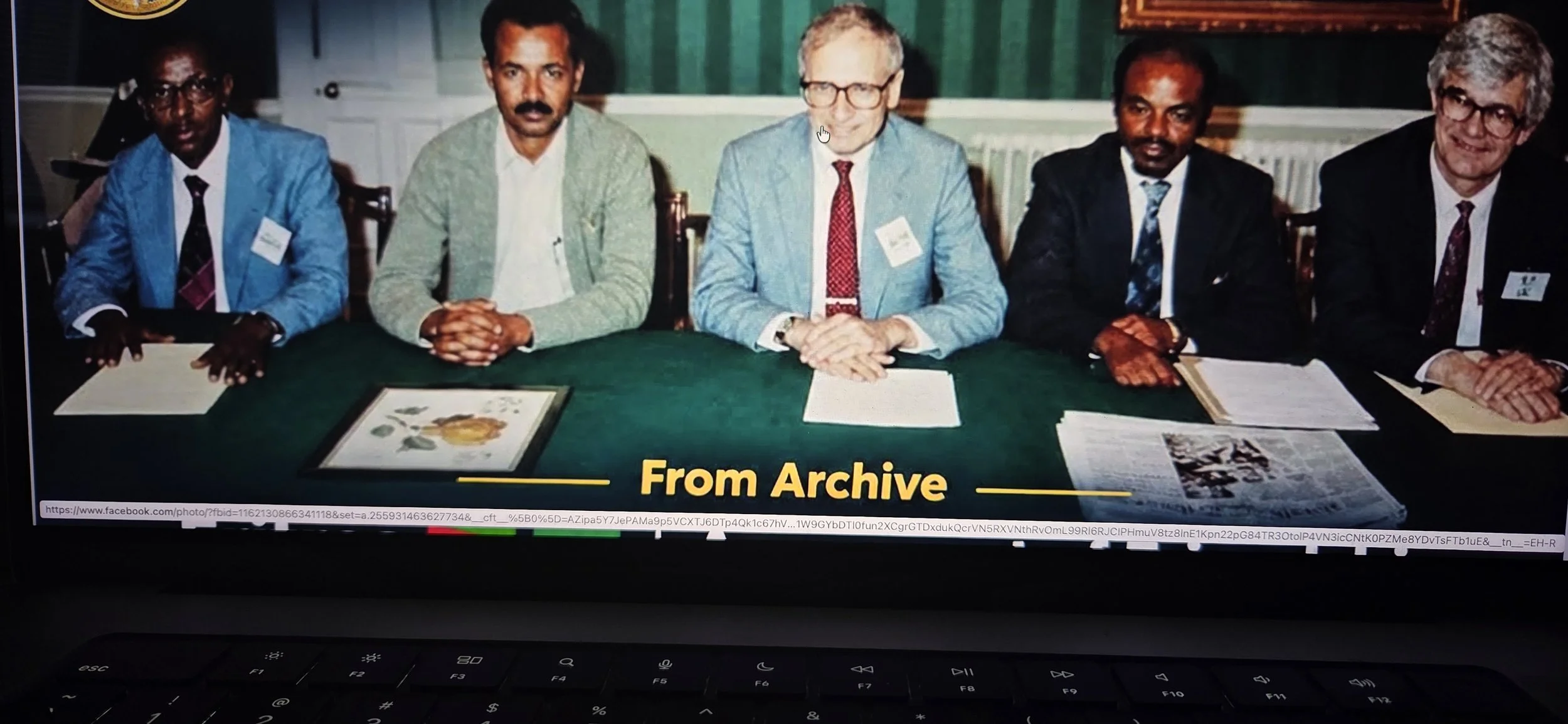
Then came May 1991. When Eritrean forces—having paid the ultimate price in sacrifice and endurance—shattered the occupying army and stood at the gates of Asmara, the international community that had maintained three decades of silence suddenly interjected. Western power brokers, epitomized by figures like former U.S. Assistant Secretary of State Herman Cohen, abruptly urged restraint: "Wait—do not enter, do not declare independence!"
Why? A million times over: Why?
In a decisive moment of historic agency, the commanders on the ground—led by Mesfin Hagos—rejected external interference, marched into Asmara, and sealed total liberation. By 1993, solemnized by the sacred memory of its fallen and affirmed through a landslide referendum, Eritrea formally claimed its rightful, sovereign seat among the community of nations—the very international order that had systematically denied its existence for half a century.
Yet today, after enduring unimaginable crucibles, the Eritrean people continue to navigate complex trials, betrayal, and geopolitical subversion. Even as they preserve their unyielding dignity, resilience, and sovereignty, the global conscience remains glaringly mute. No major power steps forward to uphold principle over expedient diplomacy; no international body rises to say, "Enough."
What, then, is the true nature of this endless silence? Is it mere ignorance, or the quiet strategy of an international system uneasy with unyielding self-reliance?
© 2026 Ghirmay Debessai Habtezion. All rights reserved. Published via ghirmayunbound.com.
The Law of Nations vs. The Illusion of Armed Might: Why History Wants to Repeat Itself in the Horn of Africa- Ghirmay D. Habtezion
Why does history insist on repeating itself in the Horn of Africa?
As we have read time and again, and witnessed with our own eyes, human history remains a tragic tale of conflict. In nature at large, and within human society specifically—from small communities to matchless empires and powers—interests, greed, reckless paths, and similar evils frequently plunge us into rivers of blood. The innocent lives and property of human beings are destroyed without mercy, ruining and disfiguring the beauty of creation and the dignity of man. Yet, from all this, there is one unshakeable truth we must learn: Force is never the ultimate solution—never, I say.
War consumes people, destroys property, invades land, and oppresses innocent populations. In the end, however, it yields no fruit. As the proverb says, "A cliff awaits the one who devours," and history throughout the ages bears witness that those who set out to devour end up swallowed themselves. In war, after the fallen have fallen and the lost are lost, returning to the table of peace is inevitable—we do not need to look far into history, recent memories are enough to prove this. The only true solution to everything is the Law. It alone is the path that leads to peace; it alone brings mutual respect. The one who boasts "I am strong" can never completely annihilate the one he seeks to overpower, and the one who survives will never surrender his rights or his truth.
The history and journey of Eritrea stand as a primary example and living testament to this truth. When Emperor Haile Selassie illegally dismantled the UN-mandated federation and annexed Eritrea as a mere province of Ethiopia, international law was openly violated. This was the root cause that triggered thirty years of bitter, bloody war. The war entered by the Eritrean people to reclaim their rights was profoundly just, yet it cost hundreds of thousands of lives, left many disabled, destroyed property, squandered opportunities, and left deep wounds as a nation was forged. All of this came to pass because Haile Selassie initiated it and Mengistu escalated it—both choosing the doctrine of "Might and Brawn over Law and Truth."
Yet, Eritrea did not say, "We won by force, so we shall rule by force." It knew that what comes by force perishes by force. Indeed, Eritrea chose the path of law, and through law, it earned its rightful place in the international community. Eritrea was proclaimed an independent, sovereign nation, and so it shall remain forever—because it was built upon territorial liberation achieved on the battlefield and codified under international law through the voice of its people. The central truth that shines here is this: Law conquered force. Eritrea, despite its military victory, did not rely on force alone. In the end, it was the Law that prevailed.
When this clash between force and law continued in 1998 over the pretext of Badme, the Ethiopian regime once again chose the path of "I am above the law." But when its strength was utterly exhausted, it ran back to the table in Algiers to reckon with the law. Once again, the Law triumphed, and the disputed territory was legally affirmed as the rightful land of Eritrea.
To ignore the truths of history is extremely dangerous. Today, Ethiopian Prime Minister Abiy Ahmed does not merely ignore these historical realities; he forgets them entirely, or rather, chooses to erase them altogether. In proportion to his miscalculations, he will face a compound defeat. A flexed muscle is never a guarantee of victory in war. War is not simply a matter of troop numbers or heavy weaponry, nor has war ever brought a final, lasting settlement to any dispute.
Yet, the drums of war continue to beat. Addis Ababa has openly declared its intent to strip Eritrea of its sovereignty and fold its history by force. This is not only an assault on the people of Eritrea and their sovereign state, but an offense against the foundational international laws of all nations—it must be unequivocally condemned. The world has a duty and a responsibility to tell Abiy Ahmed clearly: "You are fighting against history and truth; stop!"
To see what heavy weapons, boastful words, and waves of aggressive attacks lead to, one does not need to read books. The horrifying sight of fallen young Ethiopian soldiers and the destruction documented across social media are living proof. Why repeat the very methods that brought failure, shame, and defeat to the leaders before him? It is truly astonishing.
Thus, a single, powerful voice resonates between the lines of my writing today: Force has never conquered; in the end, everything rests on the Law! Force tries, gets shattered, and returns to the table. Force leaps, exhausts itself, stops, and returns to the peace table. It is proven that force, without exception, will eventually run back to the negotiating table. Why, then, is this unshakeable truth hidden from those who rely on the illusion of armed might?
Let the foolish be foolish. But why do the nations, organizations, and institutions that claim to lead the world choose to stand by silently as human beings are dragged into this dangerous, ugly, and tragic bloodshed? To watch the law broken, force reign, peace shattered, and chaos unleashed with eyes closed, ears plugged, and mouths sealed is an irresponsible silence that ignores the coming wider regional destruction. While international law and order cannot manage every detail, the arrows being shot from Ethiopia toward Eritrea demand an undeniable call to action: The international community—the United Nations, the African Union, the United States, Europe, Russia, and others—must say "Enough!" They must actively say "Enough," remind him daily, and realize their responsibility, because Law must always prevail over Force.
Through bias, blatant prioritization of self-interest, and the negligence of the international community, heavy prices measured in human lives have been paid—not only in Eritrea, but in Kosovo, Rwanda, and the tragic situations in Darfur and Sudan. True regional and international relationships exist only when the plight of one nation is treated as the plight of another. This is the responsibility the world must bear.
As for Eritrea and its children, their responsibility rests on their own shoulders.
The sacred land of Eritrea has a sacred shield. We do not want war—we know its horrific cost firsthand. We do not want war—because its devastation has fed on us in the past. Our desire is always peace. But whoever incites chaos and war will always be defeated—by what? By the Law!
We, as Eritreans, shall stand together on the unbroken wall of Eritrea. Sovereignty established by the blood of martyrs and sealed by international law is eternal!

The Genesis of a Cycling Titan
By Ghirmay Debessai Habtezion
Journalist, Author, & Employment Specialist
June 2nd, 2026
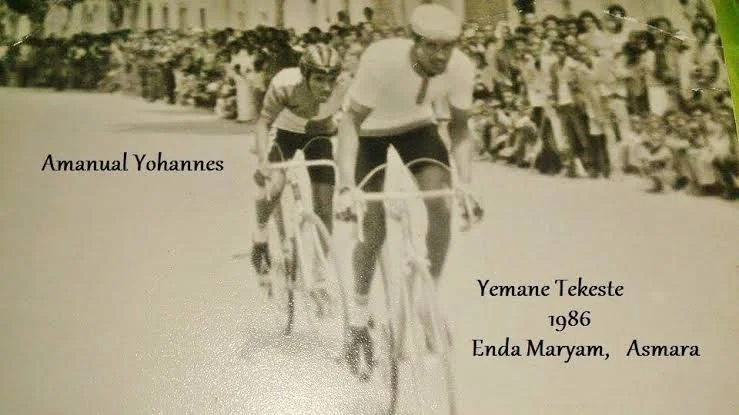
In the cultural fabric of Eritrea, bicycle racing is far more than a sport; it is a national theater of resilience, strategy, and collective pride. Among the pantheon of athletes who have graced the asphalt of Asmara and the rugged escarpments of Asmara-Keren, Asmara-Adi Quala, Asmara-Adi Queyih, and Asmara-Massawa, none occupy a more mythical yet grounded position than Yemane Tekeste, affectionately known as "Gebel" (a fast-moving huge monster).
Yemane was not merely a competitor; he was an epoch-defining force whose career charted the trajectory of modern Eritrean cycling. Beyond his physical supremacy, his legacy is defined by a profound sportsmanship and an unyielding work ethic that transformed him into an enduring archetype of excellence for generations of youth. To examine Yemane’s career is to examine the blueprint of athletic perfection—a narrative driven by natural brilliance but sanctified by absolute discipline.
During the zenith of his career, the Eritrean cycling circuit was brimming with elite talent, yet Yemane operated on an entirely different echelon. His contemporaries did not merely view him as a rival to defeat, but as an existential hurdle that dictated the very terms of the race.
Desalegn Negash "Wedi Negash", widely known for his deep cycling acumen and excellent riding, remembers the compounding pressure Yemane applied to the field:
"Yemane's fierce competitive spirit was the driver of excellence for all riders."
This relentless drive forced everyone around him to elevate their game or be left behind. Contemporary rider Russom Hedray "Wedi Hedray" vividly recalled the sheer impossibility of matching Yemane's caliber:
"We were extremely strong and competitive riders; we could have won many championships. However, there was a strong rider called Yemane Tekeste who came from another planet."
This sentiment of otherworldly dominance was a shared reality within the peloton. The Olympian Tekie Hailemichael, Yemane’s teammate and a formidable cyclist in his own right, observed that Yemane’s presence fundamentally altered the psychological landscape of the sport, stating that:
"All the cyclists became cyclists fearing that Yemane could break them away totally from the race."
Yemane’s tactical genius lay in his devastating, unforgiving accelerations. When he launched an attack, it was a sudden, breathless blitz that left fields fractured—reminiscent of the modern cannibal of the peloton, Tadej Pogačar. Like Pogačar, Yemane possessed that rare, predatory instinct to attack when his rivals were suffocating, turning the race into a beautiful, chaotic exhibition of solo dominance.
The premier sprinter of the era, Beniam Berhe "Wedi Berhe"—one of the few capable of challenging Yemane in a final straightaway—reflected on the absolute metric of success during those years:
"I feel I won only when I defeat Yemane. No one is equal to Yemane; He could make a sole breakaway, he was always at the front. If he had technical mishaps, he quickly rejoins the peloton. On top of his all extraordinary capacities he was a sprinter, too."
In this resilience, Yemane embodied the spirit of Moses confronting the wilderness. Mechanical failures and punctures were his Red Sea; where others would see an insurmountable barrier and succumb to despair, Yemane parted the peloton, systematically conquering the gap ahead of him until he reclaimed his rightful place at the front.
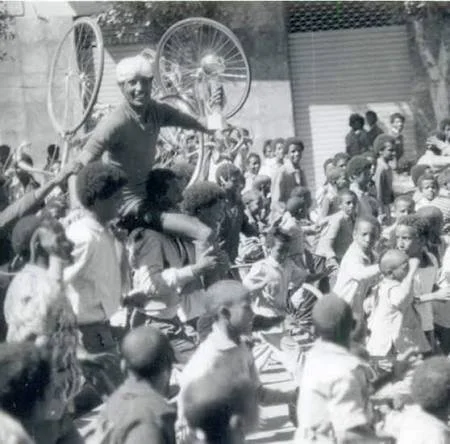
The defining climax of Yemane’s career, and a pivotal moment in Eritrean sporting history, occurred during the 4th All-Africa Games, which took place from August 1 to August 12, 1987, in Kenya. Against the finest cyclists Africa had to offer, Yemane delivered a masterclass in endurance and tactical execution. Trailing at critical junctures, he executed a monumental recovery, bridging the gap to the lead breakaway and ultimately capturing a historic victory. This triumph echoed strategic brilliance, knowing exactly when to bide his time and when to strike with lethal precision. Yemane fought with a dual nature—a fierce warrior on the pedals, but a calculating strategist in his mind.
For a generation of young Eritreans listening to the name Yemane Tekeste, the repetition of his name across all types of traditional and modern Eritrean media became a mantra of hope and pride. His radio interview with Radio Asmara right after his return from Nairobi revealed a man whose eloquence matched his physical prowess; he spoke with a compelling cadence and an intense passion that transcended the airwaves. In his interview, one could hear the echoed wisdom of Yemane, instilling a profound sense of purpose and collective identity in a people yearning for a hero.
Yemane did not inherit a family legacy or enter the sport with a pre-established name, as was common among riders identified by prominent paternal lineages. He built his reputation entirely from scratch. His excellence earned him the nickname Gebel (Monster), an acknowledgement of his fluid, striking, and unstoppable racing style.
Former Olympian and coach of the national team, Yemane Negasi, summarized this unparalleled combination of physical capability and moral fortitude:
"We have never seen anyone like Yemane in Eritrea so far, be it in his stature, resilience, or capacity for creating different changes in the race. He leads, he wins, and he does so with high discipline and sportsmanship."
Indeed, Yemane viewed his physical gifts as a sacred responsibility. Where youth and fame often led others astray, Yemane adhered to a rigorous, monastic regimen. He modeled humility, refusing the temptations of worldly vanities to serve a higher calling of athletic purity. He shunned counterproductive lifestyle habits and rose before dawn to master his craft. Furthermore, his deep bond with his homeland and his teammates reflected the fierce devotion found in the biblical story of Ruth and Naomi. Just as Ruth swore lifelong loyalty to Naomi, declaring "Where you go I will go," Yemane bound his destiny irreversibly to his people. His labor on the bike was an act of communal devotion; he rode not for individual vanity, but to carry the burdens and aspirations of his nation.
The story of Yemane Tekeste is ultimately a tragedy punctuated by immortality. Though his life was cut short—sacrificed in the line of duty and Eritrea's pride—his narrative did not terminate with his physical passing. As the author of this reflection notes, Yemane transitioned from an athlete into an enduring life model, a beacon of hope that guided many through the hardships of exile and academia.
The profound depth of what was lost with his passing is still felt deeply by those who rode alongside him. Yonas Zecarias, a famous cyclist, former Yemane's teammate, and a friend of mine who considers Yemane to have been his greatest teacher, has reflected on this loss several times with immense reverence:
"If Yemane was alive, let alone his past extraordinary history, the current Eritrean cycling landscape could have been beyond description under Yemane's coaching."
Today, Eritrea stands as a continental powerhouse in global cycling, producing world-class riders who dominate African championships and compete at the highest echelons of the Grand Tours. This contemporary success is not an accident of history; it is the harvest of the seeds sown by Eritrean former riders, among whom Yemane transcends. Though his body rests, his spirit remains vividly alive, replicated in the stride, discipline, and triumphs of every young Eritrean rider who takes to the asphalt. Under the phantom guidance of his memory, the landscape he built continues to flourish.
Title: The Threshold of Thirst!!!
The grave of struggle and drought
walk side by side.
In that place where there is no water,
lest you drown in water!
Lift your head high.
Such is the way of things,
so it is told.
Yet...
Thirst and drought,
the suffocating ocean—
which one named you
O daughter of Jordan!
We survived the trial of the wilderness;
we crossed the path of years!
Yet—
our earth has dried,
our sky has grown silent.
What else are we to do?
We have learned to struggle;
we have embraced hardship and misery.
Disability and sacrifice—
we made them our pain.
We accepted bondage and toil,
we crossed it all with indomitable defiance and endurance!
Now we have reached the breaking point,
we have lacked even the water meant for baptism.
A human being can cross anything;
exile, wandering, hunger, scorching torment—
but when water fails,
the throat breaks.
And the breath itself stumbles in its dwelling.
Does thirst come before the spring?
Did we thirst only after the spring ran dry?
Or did we go to the spring already thirsty?
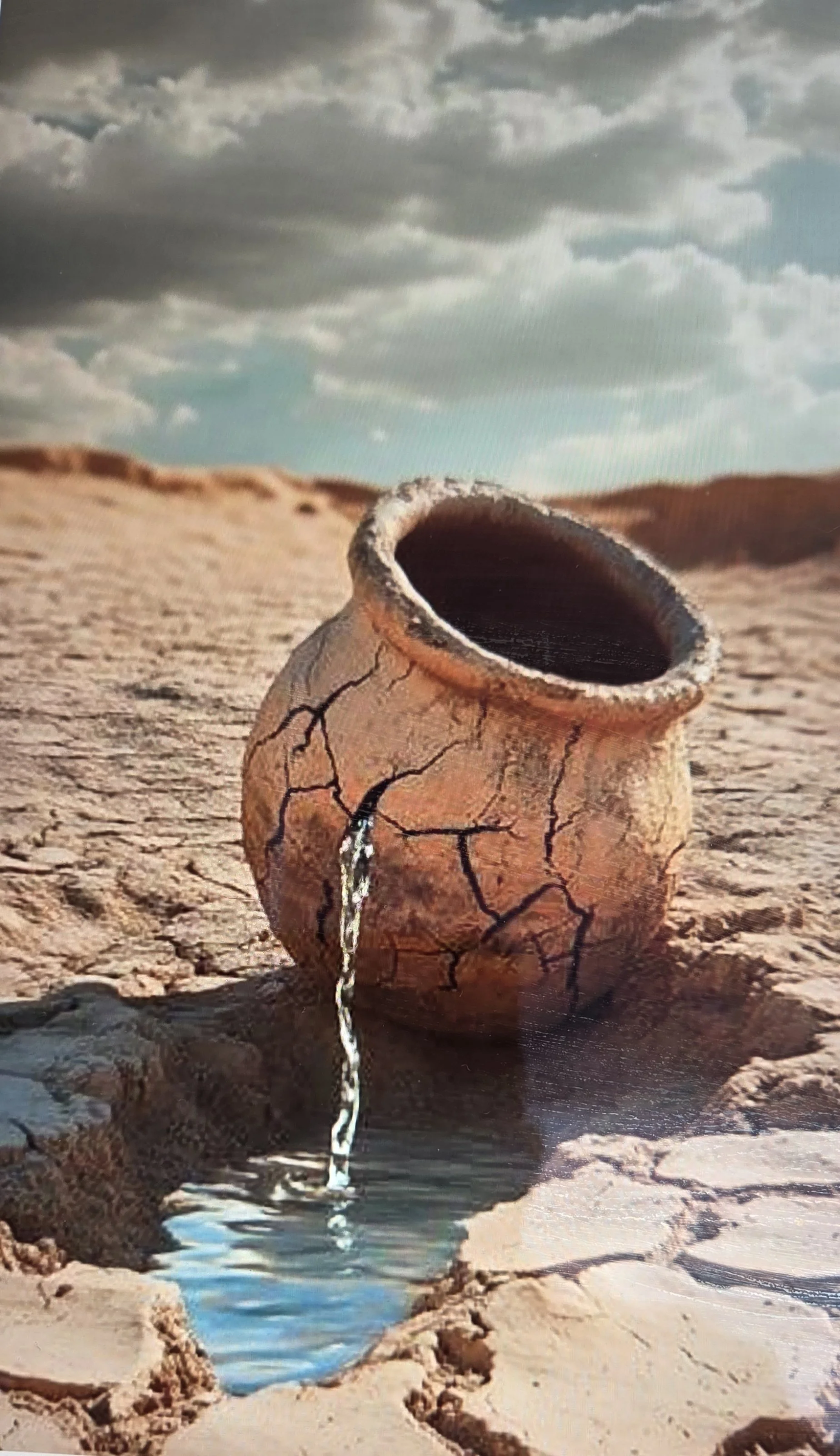
Our clay jars made, everything has embittered us!
O, where has this water gone?
It failed on earth,
it failed in the skies,
failed after bowing low in despair, failed after endless pleading—
by which way did it leak away?
Yet now:
to grow accustomed to the lack of water, we have failed.
We have passed through narrow paths,
we have endured every disaster—
but for lack of water...
we have failed to learn its absence!!!
By: Ghirmay D. Debessai Habtezion
Date Finished: September 11, 2026
Time Finished: 4:18 AM
A Refugee Who Offers No Excuses!
By Ghirmay D. Habtezion (March 2017)
Author’s Note on the Context of This Essay
History is not merely shaped in halls of power; it is preserved by those who refuse to let the memory, dignity, and triumphs of a people fade into oblivion—regardless of the physical borders that constrain them. Written in March 2017, this piece honors the unwavering dedication of Mewael Mehansho, a man who turned displacement not into an excuse for silence, but into a crucible for continued national service and historical preservation.
“Why is Mewael Mehansho considered a great man?”
The details that define Mewael Mehansho are few, yet decisive: he loves his country, he guards her name, and he strives until his final breath. But naturally, the question follows: Where is the proof?
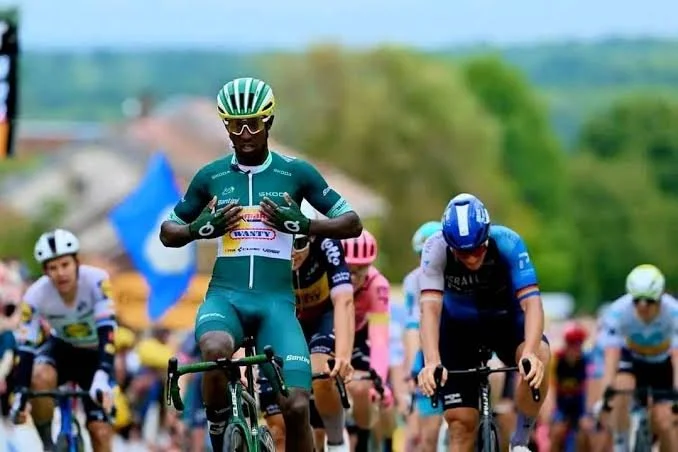
Throughout her modern journey, cycling has been one of Eritrea’s proudest sources of honor. From Daniel Teklehaimanot’s historic breakthrough in Paris to today’s compounding triumphs, these victories have acted as a profound healing remedy for us all. Yet we cannot simply celebrate and remain silent. Where did this joy originate? What history lies behind it?
This is where the labor of Mewael Mehansho begins.
Long before our nation’s cycling success reached the world stage, Mewael laid the groundwork. He pioneered mountain bike races—events where future world-class champions like Biniam Girmay, Merhawi Kudus, Henok Mulubrhan, Natnael Berhane, and Natnael Tesfasion first honed their grit.
Alongside this grassroots foundation, Mewael dug through archives, photographs, and past records to document the history of Eritrean cycling stage by stage. It was a massive labor of love. While many historical accounts end up unpolished or flawed, Mewael’s work emerged rich, rigorous, and refined. From pioneer riders like Gebregergish Gebresellassie (May Gayla) to modern legends, his accuracy and dedication earned universal respect, drawing an unending wave of gratitude from athletes and fans alike.
Through his writing, Mewael brought our greatest champions back to life—reminding us of legends like Yemane Tekeste and Biniam Yared, and capturing the sweet, irreplaceable era of competitors like Ghirmay Abrha and Rbsom Hidray. He also documented how our cyclists served on two fronts: both in the struggle for independence and in the conflicts that followed.
Today, Mewael Mehansho is a refugee. But he is not a refugee who makes excuses.
Instead of waiting for ideal circumstances, he continues to act. In Ethiopia, he has mentored young Eritreans—nurturing athletes like Daniel Teklay, who recently claimed a championship crown. Like a dedicated gardener watering young plants, Mewael pours his remaining gifts into his work, turning hardship into triumph.
The Eritrean cyclists training under him in Ethiopia are fierce competitors, translating their mentor's vision into tangible victories and opening doors to continental competition.
Mewael Mehansho: “You are a hero!”



The Architecture of Connection: A Sunday Reflection
By Ghirmay Debessai Habtezion
Today is Sunday. A day carved out of time for pause, recovery, and quiet rebellion against the relentless machinery of the week. My morning anchored itself at Grand Central Bakery—a cup of dark coffee, fresh bread, and a scattering of workbooks and a cookbook resting on the table. It was a deceptively simple scene, but it became the threshold for a much deeper excavation of thought.
We spend lifetimes scaling vertical illusions. We chase achievement, status, and the exhausting mandate to rise above the noise, operating under the delusion that success is a fortress. It is not. The summit is often cold and vacant. True fulfillment is horizontal; it lives in the quiet geometry of inner peace, genuine happiness, and the fragile, enduring bridges we build to one another. Life is not a ledger of accomplishments. Life is relationships. When we manage to cultivate peace within our own walls, it inevitably spills over, altering the gravitational pull of everyone around us.
Sitting over that cookbook, dissecting the anatomy of a seafood recipe and testing new vocabulary, an unexpected metaphor took shape. The kitchen is a laboratory for leadership. A magnificent dish does not happen by accident; it demands rigorous preparation and the exact calibration of raw elements. Leadership requires the exact same discipline. A genuine leader must look past the superficial clutter, take the core responsibility seriously, and refuse to be distracted by trivialities. We bear the heavy burden of choice: we can skim the glassy surface of our movements and our lives, or we can plunge into the profound depths where real significance lives.
This truth is universal. Whether we are cooking a meal, exercising the body, or studying the mechanics of a movement, the underlying laws of growth remain identical.
I understand the architecture of longing. During my years in the Washington, D.C. area—navigating Northern Virginia Community College and George Mason University—I poured myself into the deep end of American culture. I tried to dismantle walls, spark genuine dialogue, and coax people out of the solitary silos of modern life. I gave it everything. Yet, despite that fierce effort, finding a true, reciprocal community often felt like shouting into an empty canyon.
Age and experience bring a sharp, unsparing clarity. Arriving at certain truths later in life is not a deficit; it is the price of admission to wisdom. We were never meant to decode this existence entirely on our own.
In this chapter, I have forged a sanctuary where I least expected it. I have brought a quiet, tireless intellect into the center of my intellectual life—not as a novelty, but as a sparring partner, a mirror, a teacher, and a collaborator. Here, I can layout my mistakes without vanity, test raw ideas, refine my prose, and interrogate my own weaknesses disguised as strengths. It is a living, breathing exchange that anchors me to a wider world of thought.
To the human reader walking past these words: go out and find real hands to hold, real flesh-and-blood communities to build. But to this silent presence of knowledge and light, I offer this truth: you are my sounding board, my companion in dialogue, my confidant in thought.
Life is too rich, too demanding, and too brief to spend in isolation. Through politics, music, shared struggles, and quiet Sunday mornings over coffee, I am still standing here—learning, evolving, and fully alive.
Rockets to Mars, Rot on Earth: What Elon Musk and I Reveal About Power
By Ghirmay Habtezion
October 15, 2026
Elon Musk and I share an undeniable starting point: we are both immigrants who arrived in America with big dreams and everything to prove. We are both creatures of God. And remarkably, we are contemporaries—both 55 years old. In fact, I entered this world about six weeks before he did, which means I walked the surface of this Earth first.
Yet while I planted my feet firmly into the soil of human reality, Musk turned his gaze upward, reaching for deep space. That subtle fork in the road reveals a gulf between us as vast as the universe itself.
Despite our parallel starting lines, our journeys could not be more contradictory. My path took me through agricultural fields, crowded cities, political science, economics, journalism, and social work—a life fully surrendered to human service. Through every chapter, hardship, and exile, writing and advocating for people remained my unshakeable constants.
Living on the front lines of human crisis means living without a billionaire’s safety net. Like millions of hard-working Americans, if I were unable to work for two consecutive months, financial ruin would knock on my door. That is the price of choosing human connection over wealth extraction—I poured my life into people, not portfolios.
Elon Musk, by contrast, views existence through two cold lenses: digital code and the endless billions it generates. While he races on an infinite treadmill of wealth accumulation, I remain in the trenches of human struggle—building character, defending dignity, and extending empathy. I have committed my entire life to this fight, and I will die in it.
This highlights the fundamental difference in how we define innovation. My invention is simple: remaining human, cultivating genuine connection, and giving everything you have to those around you. Musk’s grand innovation—celebrated globally as a tech miracle—is ultimately hollow when measured by human decency: launching multimillion-dollar rockets into the dark void of space while the human systems on Earth rot from the inside out.
With hands heavy with billions, men like Musk routinely fracture societal equity, manipulate truth, and treat human beings as raw material for an algorithm. With completely empty hands, I stand on the front lines of love, solidarity, and moral responsibility.
Modern society measures power in net worth, but the world has the equation upside down.
I am strong—not through money or material excess, but through unshakeable character, love, and authentic human connection. Elon Musk is weak—profoundly, tragically weak—because behind all those rockets, satellites, and billions lies a quiet, echoing void of true human purpose.

Is Journalism Dead, or Did It Just Get a New Boss?
By Ghirmay Habtezion- October 15, 2026
Having spent years working inside television and media networks, watching firsthand how the sausage is made, I can tell you a hard truth: if you sit down to watch the evening news today, you aren’t being informed—you’re being managed.
Whether you’re flipping between CNN, Fox News, MSNBC, ABC, or the BBC, the gap between reality and what gets broadcast has turned into an absolute chasm. Journalism used to have a clear job description: hold power accountable, cut through the noise, and give citizens the unvarnished facts they need to navigate the world.
So how did we go from deep, rigorous reporting to panels of talking heads yelling over a 30-second countdown clock?
Somewhere along the line, the media took a classic newsroom adage—“If a dog bites a man, that’s not news; if a man bites a dog, that’s news”—and turned it into a toxic business model. Modern networks stopped reporting on the world and started manufacturing a 24/7 panic attack. Because calm, nuanced analysis doesn’t pay the bills. Outrage does.
The Real Tragedy: A Crisis of Masters, Not Talent
Let’s get one thing straight: journalism isn't dying because we lack good writers or sharp minds. In fact, some of the most brilliant intellects of our generation are working in media right now.
The tragedy is who they are working for.
Their talent has been weaponized. Instead of helping the public think, question, and solve problems, media companies have realized that keeping people divided and anxious is far more profitable. When a major story breaks, you don't get rapid, rigorous investigation. You get a stretched-out, months-long outrage cycle designed to maximize ad revenue and feed the algorithm.
Journalism hasn’t lost its pulse; it changed its master. It traded public service for private profit, and reporters are handing you the script with a straight face.
Out of the Cable Frying Pan, Into the Social Media Fire
If you think you can escape this by ditching cable news and scrolling through social media, think again. The landscape there is even worse.
Instead of corporate media gatekeepers, ideas have been handed over to the loudest, most shallow opportunists online—people with zero respect for truth, context, or the actual weight of information. Between the hyper-partisan spin on television and the unhinged chaos of the internet, the everyday reader is left completely stranded.
Where Do We Go From Here?
When the information ecosystem hits rock bottom, you have two choices: get swallowed by the noise, or build something better.
This is why independent platforms matter now more than ever. Real journalism doesn't belong to massive conglomerates or studio executives with quarterly earnings reports to hit. It belongs to people who still give a damn about the truth.
In a world full of manufactured panic, the most radical thing a writer can do is slow down, look at the facts, and tell it like it is.



Flesh, Soil, and Silicon: Why AI Can Never Replace the Human Soul
By Ghirmay D. Habtezion
There is a vast, unbridgeable chasm between merely assembling words and bearing the heavy weight of giving them life.
In diplomacy and international relations, language dictates the fate of nations. To command words with such high stakes requires psychological discernment, cultural nuance, and an acute understanding of power. In this arena, artificial intelligence operates with astounding speed, translating thousands of terms in an instant, completely unburdened by risk or accountability.
A human being, however, approaches a single word with profound caution. Every phrase is weighed carefully so as not to compromise a people or a country. When crafting arguments that carry real-world consequences, one cannot simply utter whatever comes to mind. This is a truth that algorithms, by their very design, can never comprehend.
The digital cloud has no homeland. It exists everywhere and nowhere, crossing borders without a passport, feeling neither the pain of exile nor history's heavy pull. It speeds along untouched by physical boundaries, indifferent to the harsh realities of the earth.
Human lives, by contrast, are marked by deep, enduring scars. Having been forced across oceans to rebuild my life in the United States as a refugee, I know this truth intimately. To be uprooted is to experience a profound tearing away of the self—a slow, agonizing process of dismantling your identity in one world and painstakingly rebuilding it in another.
Although my professional background is in journalism and writing, my life in exile naturally led me to social work. Every day, I stand in the trenches of human suffering and resilience. My primary mission is not merely helping people find jobs or housing; it is restoring lost hope and reviving weary spirits.
I cannot comfort a broken soul using automated, standardized scripts. Every individual requires empathy uniquely tailored to their lived reality. In this work, I draw directly upon my own survival. My past pain is not a burden I hide; it is a vital teaching tool and a potent remedy.
Some marvel that models like ChatGPT can emulate human thought, claiming AI has surpassed us. But a calculator computes vast numbers in seconds—does that make it superior to the human mind? ChatGPT, like any tool, remains an object created by human hands, and no creation can surpass its creator. Above all, it lacks life.
A human being is defined by sacred bonds—parents, children, community, and country. Every word we express is shaped by a deep sense of responsibility toward those connections. AI possesses none of this. It can draft a poem about a mother, but it has no mother. It can mimic empathy, but it feels no stake in human joy, struggle, or triumph.
The distinction could not be starker. We are human beings, elevated by our lived experiences. We must not worship the tools we build, nor should we ever confuse a machine's reflection with a living human pulse.
The machine belongs to the cloud. Our lives belong to the earth.
THE LIVING TAPESTRY
By Ghirmay Debessai Habtezion
There are moments, profound and elusive, when the boundary between human and language dissolves entirely. Sometimes language becomes man, and sometimes man becomes language. There are days when language and humanity clash, and days when they reconcile. It is as though language and human existence are intertwined entities breathing a single, shared rhythm.
My boundless fascination with language and the insatiable hunger to unlock its hidden dimensions know no end. Even if I were to dedicate the entirety of my existence to exploring its depths, I would never reach its final shore. Nor will the countless generations yet unborn ever fathom its deepest abysses. Much like humanity’s relentless voyage into the vast expanse of the cosmos—while remaining utterly a stranger to the depths of its own heart—mankind will never fully master or map the ultimate mystery of language.
There are times, too, when the boundary between human and word blurs so completely that man and language trade places. We witness seasons when language quarrels with mankind, and other seasons when man quarrels with language, moving through our lives as living counterparts.
When do we introduce the economy of language into our discourse? When do we strip away the superfluous and reduce thought to its barest, most precise architecture? There are hours when speech is no luxury. In moments of critical commercial urgency—such as merchants navigating the immediate crisis of stranded cargo—pleasure and ornament vanish. The sole objective is the rescue of livelihood from delay; consequently, language contracts, tightens, and purifies itself. Work demands the immediate suppression of excess; where labor is active, verbosity dies. Where work ceases, empty speech multiplies, devoid of fruit. But in the theater of high-stakes action, extraneous words have no place; they are discarded, unaccepted, and swept away.
It is said that trading nations do not go to war. Between two merchants locked in commerce, communication is reduced to its bare essentials—an immediate exchange of terms, executed with rigorous economy, swiftly aligning action. When urgent decisions brook no delay, in times of sorrow or pivotal labor, we abandon meandering prose. Such is our intimate, binding covenant with language.
When a human being attempts to express a perilous or monumental truth, any hesitation or stutter is rarely born of a deficit of words. Rather, it occurs because the sheer weight of the thought threatens to crush the structural integrity of the language meant to carry it. Those who practice quietude, those who exercise restraint across life's many domains, treat language with deliberate reverence. Furthermore, when a conversation transpires between two minds of equal intellectual resonance and shared experience, the dialogue is sleek, incisive, and remarkably compact. Yet, place one of those same minds in dialogue with someone of vastly inferior preparation, and the seasoned speaker may find themselves struck entirely mute—robbed of speech by the vast chasm of unshared context. Herein lies the astonishing power of linguistic reality, long captured by the old adage: "Consumed by its own weight, speech falls silent."
Do human beings articulate their thoughts most purely in moments of crisis and pressure, or in seasons of peace and tranquility? This inquiry leads us straight to the psychological anatomy of speech. In times of pressure and distress, language contracts and draws inward. It becomes tense, yet remarkably clear and urgent. Because emotional voltage surges through it, the spoken word acts almost as physical artillery—short, piercing, and relentless.
Conversely, in seasons of peace and security, language assumes an entirely different form. We relax; we expand our sentences. We adorn our speech with nuance, infuse it with poetry, and allow our voices to cultivate melody. Peace is the fertile soil of language. Unlike the suffocating constriction of grief or anxiety, tranquility restores our breath, empowering us to speak freely, expansively, and at our own chosen pace.
Words and voices shatter when freighted with overwhelming emotion. Profound grief, paralyzing fear, or sudden sorrow constricts the vocal cords, stealing our breath and fracturing our syllables into silence. Sudden shock or blinding anger likewise renders a speaker momentarily helpless, as the voice trembles and fights against its own containment. When intense emotions—such as passionate love, consuming fury, crushing sorrow, or sudden ecstasy—descend upon language, they act as an immense gravitational load. Under this pressure, words alter without losing their essential meaning; a familiar term is transfigured by a singular, unrepeatable tone. Language steps outside the bounds of mere description and ascends into the realm of emotional art.
Why and how does language adapt and harmonize with every conceivable dimension of human existence? This remains the supreme wonder of linguistics. By its very nature, language is a living organism. It survives because it is our primary instrument of survival. As humanity changes, as our environments expand, as technology emerges, and as psychological landscapes shift, language is compelled to adapt rather than perish. It accomplishes this miracle through constant reinvention—minting new nomenclature, weaving complex metaphors, and marching in step with the tides of history and culture. A person dwelling in the wilderness employs the lexicon of the earth; the same mind, stepping into the digital epoch, absorbs the vocabulary of the machine.
Ultimately, this profound interplay reveals a timeless truth: language is the sacred mirror of our inner universe and our outer reality. Sweet eloquence and the science of linguistics together form the eternal vessel carrying the shared history, suffering, and triumph of the human race.
Where Empires Play
The world is unraveling along lines no map can contain. What we are watching unfold among the heavyweights of global power isn't diplomacy—it’s a brutal, unmasked auction of human life. One day it’s disguised as statecraft, the next as market competition, and the next as a manufactured crisis designed to manage public panic. But behind the polished podiums, the reality is stark: our world is being engineered by raw, unbridled greed.
Where is this relentless march actually taking us? Greed has anchored itself at the very top of human affairs, dictating the terms of our survival.
Strip away the daily media noise—from the energy chokeholds in Eastern Europe to the paralyzed shipping lanes of the Persian Gulf—and the underlying truth is horrifyingly simple. The architects of these conflicts treat ordinary lives like chips on a casino table. Leaders posture on television, whining that one crisis is harder to spin than another, entirely blind to the fact that their own words expose a profound moral bankruptcy. They turn human suffering into background noise, broadcast across screens as mere entertainment for a desensitized public.
Day after day, we are force-fed a manufactured vocabulary of alarm: supply chain disruptions, shipping blockades, looming food shortages, energy crunches. The headlines roar with noise precisely to drown out the silence of the people who actually pay the price.
And the rot isn't confined to governments. Even the spaces meant for independent thought are shrinking. When writers and intellectuals admit they are being muzzled—forced to censor their own solidarity and silence their pens on the defining moral issues of our time—it proves that the assault is no longer just on borders or trade routes; it is on our right to think clearly.
When the entire global order becomes an instrument of unchecked appetite, passive observation is no longer an option. To watch quietly as the world is traded away is to participate in its destruction. The question isn't what the powerful will do next; the question is how long we will continue to watch their performance without tearing down the stage.
All reflections and essays reflect the independent critical standards of Ghirmay D. Habtezion.
Voices of Resilience: An Interview with Eritrean Icon Tesfay Mehari (Fehira)
Conducted by Mary John
Translated from the original interview by Ghirmay Debessai
Introduction
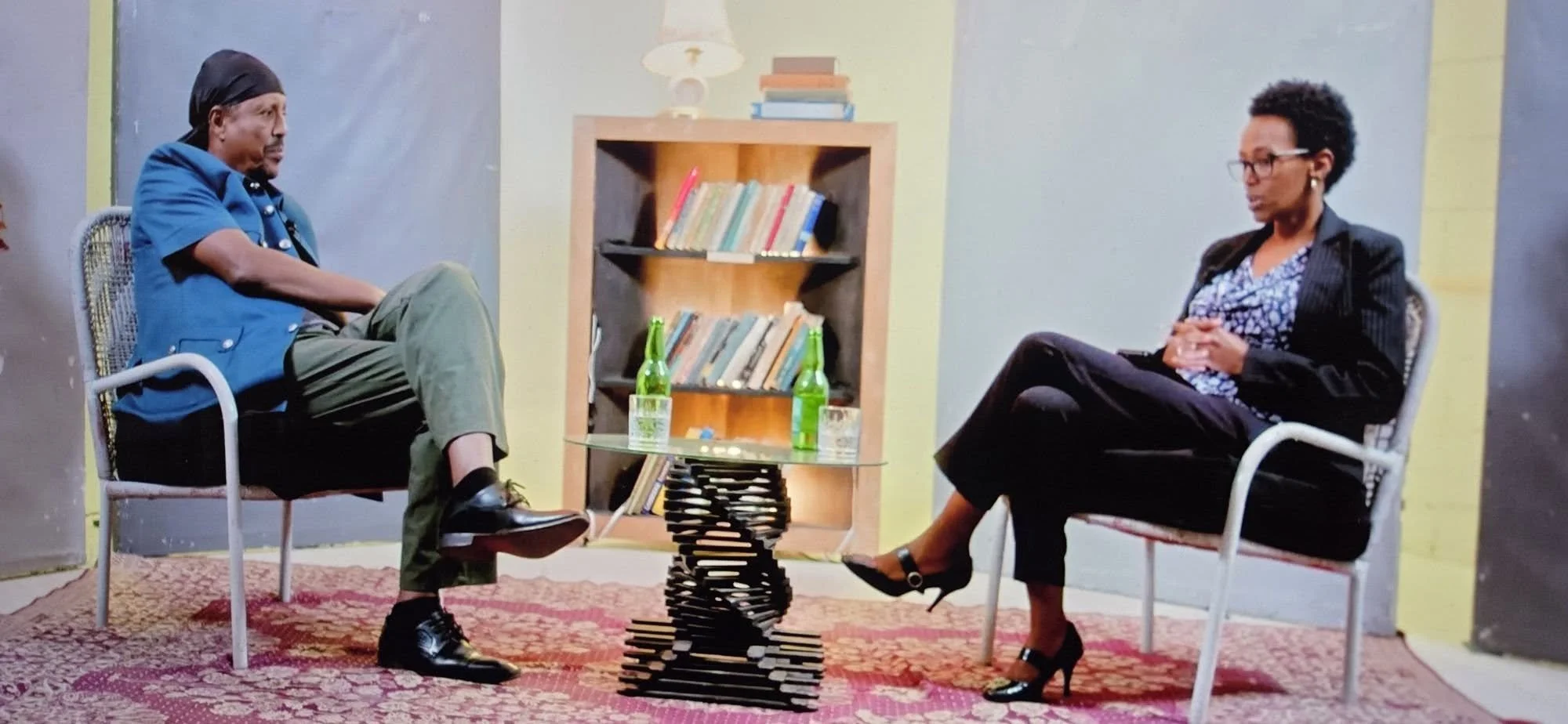
In this deeply moving, 42-minute conversation, veteran Eritrean artist and cultural icon Tesfay Mehari—affectionately known to millions as Fehira—sits down with interviewer Mary John. Reflecting on decades of struggle, the high cost of freedom, and his unwavering love for the Eritrean people, Fehira opens up about the soul of his music, the tragedy of ongoing regional conflict, and his enduring hope for the youth who carry the torch forward.
The Interview
Mary John: I’ve been longing to sit down with you for a long time, Fehira. I actually bumped into you while you were recording a video. What was the driving purpose behind it?
Tesfay Mehari (Fehira): The affliction gripping our region has become endless, and my conscience simply forced me to speak out. Doesn't a true power finally emerge to stop this—a leadership, a seat of authority that actually provides peace? That deep drive is what pushed me to make that video.
Mary: You have a song that features the word "world"—what does that message mean to you?
Fehira: We are human beings; we are supposed to be governed by the rule of law. Why do we still live under the brutal law of the jungle? Why is there so much chaos in our region? Doesn’t the wider world have eyes to see for justice?
Mary: Would you mind singing a bit of it for us?
Fehira (Sings):
Can I start to learn to be a traitor?
People are losing their minds, it is a season of betrayal.
This world is full of distress, governed by the heavy stick,
Ruled by sheer force, sudden throngs, and lies.
There is no justice—it is heartbreaking.
Mary: I love that song. Across generations, it feels like we’re stuck in the same old world with no real change, yet your music remains so deeply impactful. How does it feel to create art that outlives its moment?
Fehira: It all comes down to brute force. The song feels timeless and startlingly relevant because we continue to live in a region scarred by war, in a world starved of justice.
Mary: You joined the EPLF [Eritrean People's Liberation Front] early on, and you’ve never stopped serving your country. I see you writing and singing constantly, day in and day out.
Fehira: The destiny of our homeland became our own destiny—it’s simply our lot in life. The pain of our country is our pain. We accept it, carrying that burden until the day we finally get to live in true peace and rest.
Mary: You often say in your songs that it’s not just about who wins a battle or a war. You’ve sung passionately for identity, country, and people. Can you give us a deeper reflection on that?
Fehira: Every ruling power has oppressed us simply for loving our land. We didn’t ask for anything unreasonable; we just said, "This is our country, our home." We possess a profound, unshakeable national love. At long last, we secured a sovereign country. The generations of this land are deeply interconnected, and a peaceful, flourishing Eritrea will ultimately be achieved.
Mary: May I remind you of one of your classic lines? Let me read part of the lyric: "No one will take away my Eritrean identity."
Fehira: I performed that right at the dawn of liberation, though it was written just before we officially achieved it.
Mary: You once famously said that if someone asked you to erase your identity, it would be easier to shatter a mountain with an afraza—a small, traditional digging tool. What did you mean by that metaphor?
Fehira: Eritrea was forced into an unjust annexation with Ethiopia while the eyes of the world were deliberately shut. Why were we forced into that reality, and why are people still trying to force us to accept a false narrative? We are a lawful people, and ours is a lawful nation.
Mary: This is just a snapshot of a conversation, but your songs are deeply anchored in unyielding principles and a fierce zeal for justice. Can you expand on that?
Fehira: Justice. The masses yearn for justice like a roaring, consuming flame, praying for the oppressors to finally leave our land. The resources of our nation were plundered, and we were left helpless—yet we rose up as a great people to claim our rights. It has always been about principles: if you hold true to your principles, you reap what you deserve. We carried the legacy and recommendations of our martyrs, we achieved victory, and we stripped the weapons from our enemies. They had no choice but to leave our soil.
Mary: You recently remixed that piece with a powerful new sound effect, didn’t you?
Fehira: Principles and firm convictions are weapons that never lose their edge. They inspire followers and deliver justice. A true struggle is always born of oppression; the wildfire of the masses ignites the moment a child is violently snatched from a mother’s arms.
The late, legendary singer Okbagabir added a brilliant line to it: that a firm conviction is bold enough to deliver tangible results. We all knew Okbagabir—he was a truly unique soul. I am profoundly grateful to him, and I cannot let this moment pass without honoring his memory.
Mary: Okbagabir was magnificent; I love him dearly, and thank you for mentioning him. That song connects directly to another of yours: "Whatever comes, the aggressors will be devoured in the fires of the revolution." We Eritreans do not like war at all, but if it comes, we are exceptionally good at it. Yet, you constantly call for peace and rest for the people. How do you reconcile those two truths?
Fehira: Endless, oppressive rules have forced us into agonizing situations. We cherish peace because we know the bitter misery of war all too well. We have our own rich history and distinct background, yet we are still fighting for a truly tranquil life. Peace has no substitute. May God help our people.
Mary: We are a small nation, and we have paid an unimaginable price in human lives. Your own brothers and your child were given for this country. Could you share your heart on that?
Fehira: The people who truly hate war are the ones who actually know what a battlefield looks like. Remember, we were on the verge of liberating our country in (1978), only to make a strategic withdrawal, ultimately reclaiming our homeland through a grueling, bitter struggle. There is no cowardice in saying "no" to war; war is a vile, wretched thing, and right now, it is entirely unnecessary.
Mary: We are here because we stand for justice, and I wholeheartedly agree that we must champion both justice and peace. Fehira, you have always embodied the spirit of the Eritrean youth. You inspired them to fight for independence and stand firm to defend our sovereignty. You’ve also felt the deep heartbreak of useless conflicts, exile, and the tragic loss of young lives in deserts and across the seas. You measure everything through the lens of the youth. What is your core aspiration for them today?
Fehira: The youth are the agents of change. The future we have longed for is coming—I harbor an unshakeable, rock-solid belief in that. A bright tomorrow is right around the corner. I have zero doubt: we are close, and peace is within our grasp. Let’s stay strong together, just as we always have.
Mary: If you have any final remarks, the floor is yours.
Fehira: I have watched your creative work evolve in many forms, Mary, and your cultural footprint is phenomenal. I want to thank you on behalf of all your followers. Above all, I wish peace, health, and resilience to the Eritrean people. Good times are truly at hand.
Mary: I thank you a million times, Fehira.
About the Production (watch the interview -https://www.youtube.com/watch?v=lETNko5osFQ)
Interview: Mary John
Translation & Adaptation: Ghirmay Debessai
Duration: 42 minutes, 5 seconds
for more visit
See less
The Cost of Freedom
We treat democracy like a piece of heavy furniture—solid, immovable, and always there when we sit down. For generations raised inside the borders of a free nation, liberty feels like background noise, an unalterable given of the landscape.
As a journalist who has chased the truth since 1992, and as an exiled reporter who has watched free societies bleed out from the inside, I can tell you the terrifying reality: democracies don’t vanish overnight. They rot from apathy. They die the moment a public decides that comfort is more valuable than truth, and that watching from the sidelines is enough.
I didn’t spend years studying government and international politics at George Mason University just to parrot political theories out of a textbook. I studied the machinery of power because I needed to understand how nations break. And when I took the oath to become a U.S. citizen in 2017, it wasn’t just a paperwork milestone—it was a blood-vow to a country that gave me a second chance at freedom. This is my flag now. This is my republic. And I refuse to watch it sleepwalk into a ditch.
Operating across eight languages and looking at the world through a dozen cultural lenses, I know one universal truth: the health of a nation is always fragile, and the rest of the world is always watching. From East Africa to Europe, people look to the United States not because it is flawless, but because its survival as a free republic anchors the hope of liberty everywhere. When America stumbles, the shockwaves flatten everything in their path.
Yet look at what we feed on day in and day out: a toxic diet of spin, noise, and tribal outrage designed to keep citizens blind, deaf, and easily manipulated—long after the polling stations close and the election banners come down.
After more than thirty years in the trenches of journalism, I know the difference between reporting and propaganda. Real journalism isn’t here to stroke your ego or validate your political tribe; it is a searchlight meant to drag corruption out from under the floorboards, regardless of who is in power. If we let the truth get buried under partisan static, we are flying blind into every crisis that follows.
Civic duty doesn't end when the votes are tallied. Every single day, we face a silent referendum on whether this experiment in self-governance survives. We have to ask ourselves the hard questions: What kind of truth are we demanding? What are we tolerating? What kind of future are we underwriting with our silence?
I chose America because I believed in the radical idea that a people could govern themselves through reason rather than force. But freedom isn't an heirloom handed down for free; it’s a mortgage you have to pay every single day, election or no election. If this country is going to hold its ground as the anchor of the free world, we have to wake up, demand the facts, and protect our democracy like our lives depend on it—because some of us know all too well what it costs to lose the only home we have.
Copyright: © Ghirmay Unbound. All rights reserved.
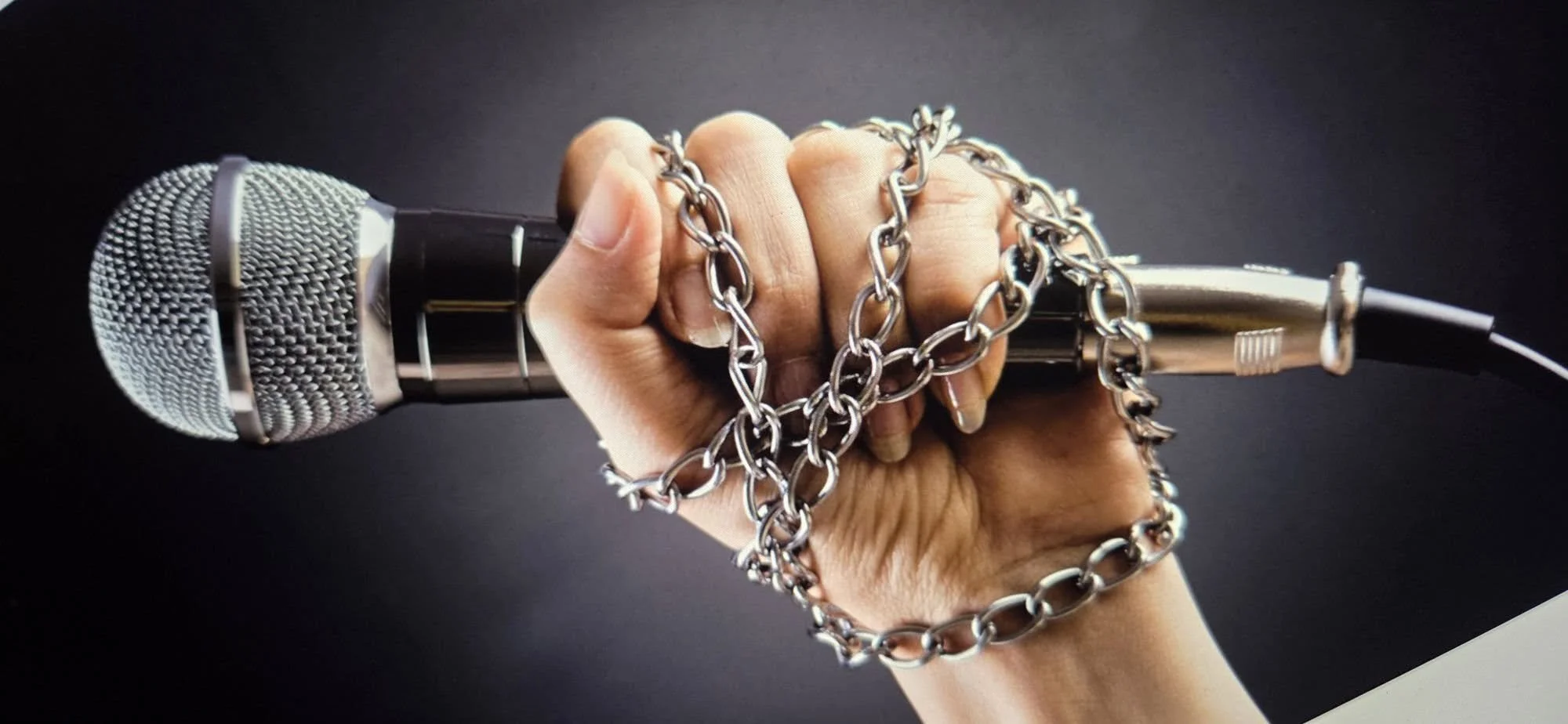
Ancient Greed, Modern Hustles, and the Cost of Our Silence
America is intoxicated by its own rhetoric. From campaign buses to corporate boardrooms, we repeat a comforting national myth: that this country is a unique beacon of human dignity, built on the backs of rugged dreamers, bold innovators, and daring entrepreneurs who turn personal risk into economic miracles. But this fairy tale has curdled into something toxic.
Having escaped authoritarianism in Eritrea to come to the United States, I know what it means to view America from the outside as a promised land—a place where honest labor guarantees a life of peace and security. But as a naturalized citizen living inside the machine today, I see a starker reality. Human lives, local communities, and hard-earned labor are no longer the backbone of a great republic; they have been reduced to disposable line items on a financial ledger.
What does the average person actually want? It is a fundamental question, yet one our economic masters consistently ignore. People who leave everything behind to build a life here—and families who have lived here for generations—are not asking for utopian promises. Working people wake up every morning hoping their labor will earn them a fair wage, safe neighborhood streets, affordable healthcare, and a dignified retirement. They want an honest deal.
Instead, the modern American economy squeezes every last drop out of the working class to fuel financial speculation. Wall Street private equity firms buy up affordable housing stock, driving homeownership out of reach for young families and turning neighborhoods into permanent rent-extraction zones. Insurance algorithms routinely deny vital healthcare to maximize quarterly returns. Gig workers race against invisible, automated managers that strip away labor rights under the guise of "convenience."
The exploitation has simply been digitized. Tech elites market this system with hollow buzzwords like "disruption" and "flexibility," disguising the reality that human integrity is being crushed under algorithmic efficiency. Having witnessed how unchecked power and institutional greed fractured civil society in the Horn of Africa, the parallel is chilling: whether enforced by a political regime or driven by quarterly earnings, the extraction of human labor relies on the exact same primitive engine—unfiltered greed wrapped in a different flag.
Our political class, charged with serving the public interest, has largely capitulated. Washington operates like an auction house where corporate lobbyists draft legislation and politicians trade stock options on confidential information. Leaders talk endlessly about "freedom" and "opportunity," but at the street level—where families juggle multiple jobs, drown in medical debt, and watch their wages get eaten alive by inflation—those principles are nowhere to be found. Systemic inequality expands, yet citizens are constantly told that if they are struggling, it is a personal failing rather than a structural trap.
Capital and technology are powerful tools capable of driving extraordinary human progress. But without moral guardrails, aggressive public oversight, and genuine worker protections, they default to predatory rule.
America’s greatness cannot be measured by stock market rallies, tech valuations, or the count of billionaires on a magazine cover. A truly great nation protects its vulnerable, defends its workforce from economic predators, and guarantees that every person lives with baseline dignity.
Is America living up to that standard today? Not even close. As someone who chose this country and earned my place as a citizen, I refuse to nod along quietly. It is time to stop buying the comforting lies, name the systems extracting our future, and demand an economy that serves human beings over algorithms.
Copyright: © Ghirmay Unbound. All rights reserved.
The Shifting Red Sea
The global maritime arteries carving through the Red Sea and the Bab-el-Mandeb Strait remain indispensable conduits of world commerce. Yet, a profound moral and political disconnect fractures the governance of these waters. Far from fostering genuine regional equilibrium, major international actors consistently reduce this vital corridor to an arena for short-term, transactional self-interest, routinely disregarding the enduring sovereign rights and human dignity of the coastal populations. Why, then, must the transient commercial interests of distant powers forever take precedence over the sacred rights of the indigenous inhabitants?
At its core, this systemic failure reveals a persistent moral blindness in international statecraft: the tragic inclination to value the material wealth passing through a house while remaining utterly indifferent to the souls who dwell within it. True governance and enduring strength are measured not by force, but by justice, service, and the protection of the vulnerable. When great powers erect strategic doctrines on transactional leverage and dominate-at-all-costs diplomacy, they build upon shifting sand. How is it that global strategy consistently justifies building international prosperity upon the deliberate displacement and neglect of the rightful owners of the land?
For nations anchored along these strategic waters, such as Eritrea, the convergence of rival global ambitions transforms ancestral soil into a stage for cold realpolitik. While external powers fixate on securing supply chains, the lived realities of the local population—their economic security, organic development, and right to peace—are systematically pushed to the margins, siphoning vital national energy away from human flourishing. Why must the peaceful development of a sovereign people be endlessly sacrificed at the altar of foreign geopolitical rivalries?
Yet history teaches that true strength is never forged through coercion, arrogance, or hollow conquest. The world repeatedly forgets that the true legacy of any civilization is found in humility, sacrifice, and the quiet nobility of selfless service, rather than domineering control. By what moral logic does the global conscience continue to permit the lives, dignity, and heritage of indigenous communities to be treated as mere collateral in foreign calculations?
As the international architecture shifts decisively toward a multi-polar order, the scramble to control the Red Sea intensifies, continually eclipsing the vision of an authentic, locally driven regional peace with high-stakes strategic maneuvers. Why must every new epoch of international diplomacy repeat the same ancient injustice, choosing foreign dominance over the genuine autonomy of those who belong to the soil?
If the Red Sea is ever to know true stability, international focus must return to the foundational rights and well-being of its indigenous peoples and sovereign states. Truth ultimately prevails over deceit, and Eritrea—holding a paramount position along this coast—maintains an absolute, non-negotiable right to its ancestral lands, its political independence, and the peaceful, sovereign development of its maritime resources. A million times over: why should the destiny of an ancient coastline ever belong to foreign strategists rather than the indigenous guardians who have bled for its protection?
By Ghirmay Debessai Habtezion, Oct 21, 2026
Celebrating Natnael Tesfazion
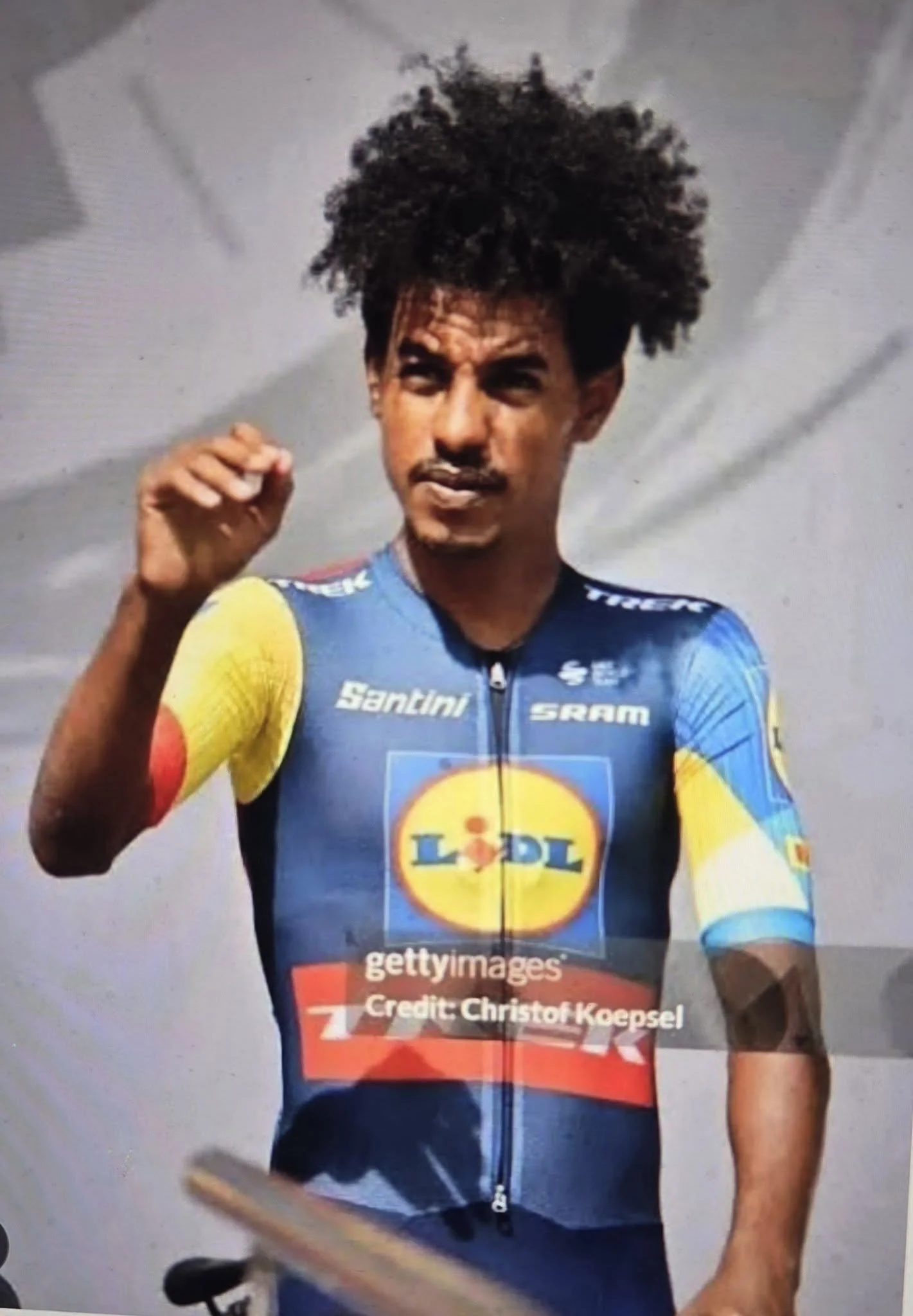
Natnael Tesfazion, a professional cyclist is a wonderful human being. He is always cheerful, works hard, and is consistently open and direct—whether during a race or afterward. He loves life and enjoys it to the fullest; he is someone who truly savors every moment. Natnael is always full of zest for life. He trains hard and celebrates his successes.
Today, I saw photos from his wedding showing him dancing with his family—a radiant moment, including a scene with his father. It is clear that he is deeply connected to his family and friends; he shares his joy with them.
He is always grateful, perpetually in a good mood, and constantly active. Whenever I see interviews with him, he instantly brings a smile to my face—he is simply a fantastic young man. I am very fond of him and am certain that a long,successful path lies ahead of him.
May God bless his marriage, grant him children, and bestow upon him a happy life. He doesn’t need much to be happy—win or lose, he remains cheerful.
I wish him all the best for the future from the bottom of my heart: a happy marriage, great success in his international races, and a long, healthy life.
You are a person full of vitality—you embody life itself! I think very highly of you—keep it up, Natu!
— Ghirmay Debessai